For the past three months I’ve been living in Tanzania and working for Dark Earth Carbon, a carbon removal company. I met the founder Arno at a global development conference a while back, and he offered an opportunity to “get your hands dirty and work on something that actually matters”. Which turned out to be charcoal as a service.
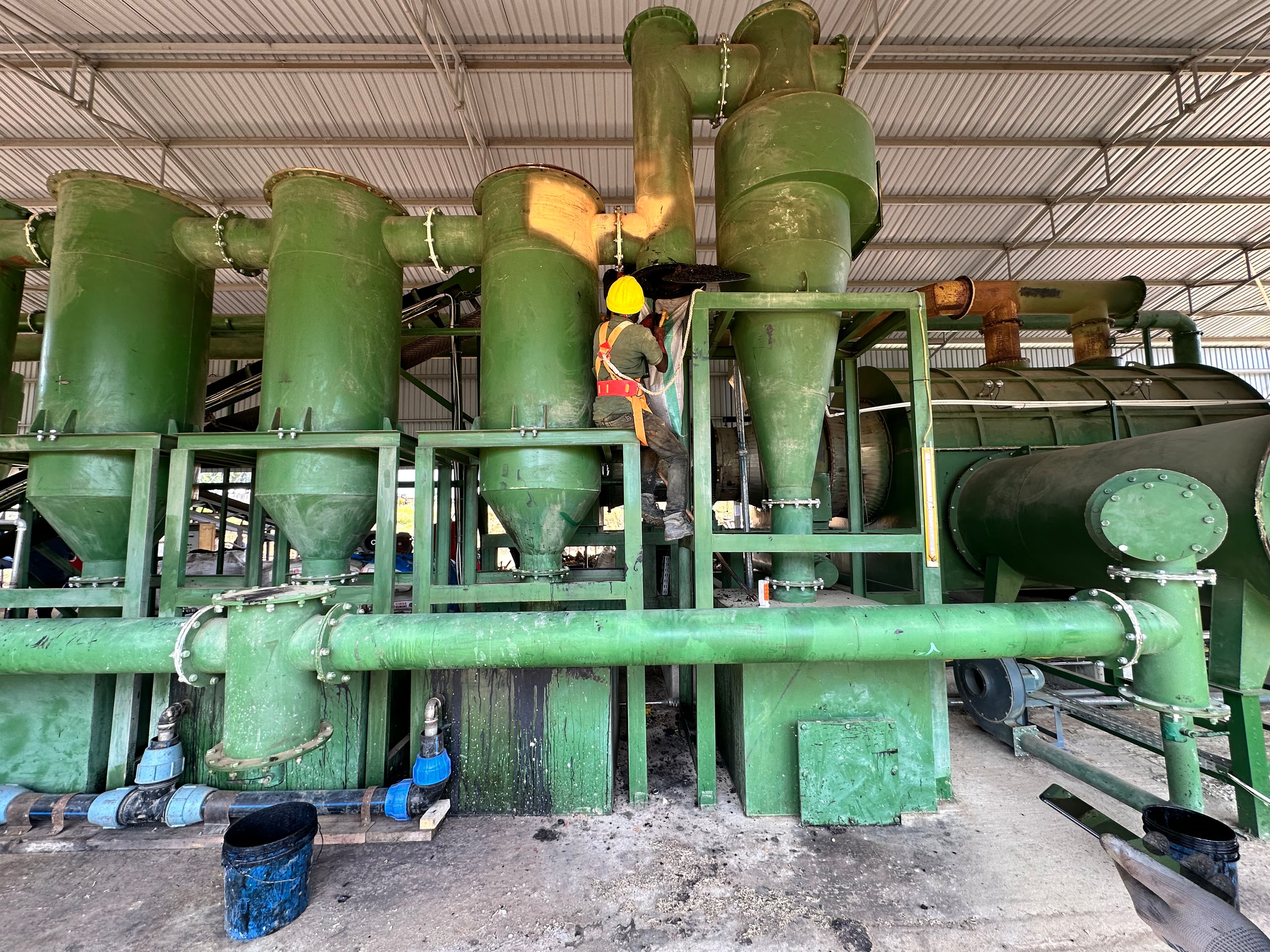
The premise is that pyrolysizing agricultural byproducts (e.g. cocoa husks, tree shavings) 1) removes carbon from the atmosphere and 2) creates high quality fertilizer. Those tree shavings would’ve counterfactually ended up decomposing and their carbon recirculating; but instead they get burnt to a crisp and buried in some farmer’s plot, where they’ll stay in the ground for several hundred years, serving as fertilizer, their porous structure trapping nutrients and doubling crop yields for smallholder farmers.
I worked with the local engineers on upgrading the pyrolysis machine, doing stuff like automating water intake and gas exhaust valves with Raspberry Pis. I also wrote carbon accounting software to track how many tons of CO2 we’re actually removing (calculated from the biochar’s carbon content, minus transportation emissions, electricity used by the facility, and so on).
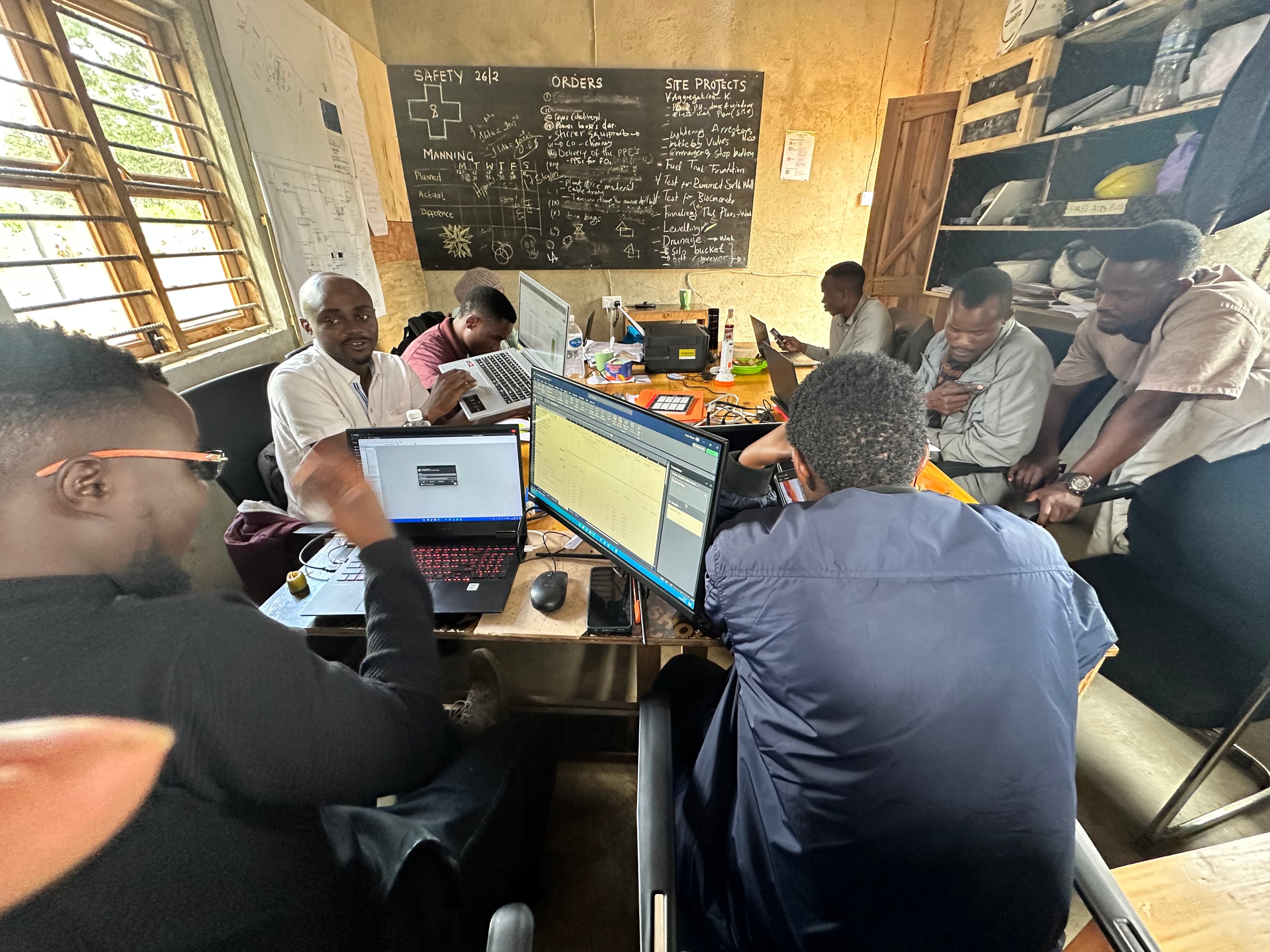
One of the engineers was really talented, and I have no doubts that if he’d grown up in the States he would’ve gone to MIT and built really cool things. The others were, generally speaking, hardworking and capable but dogmatic and didn't have the strongest critical reasoning.
The challenges of building in Tanzania were novel to me, and they threw into sharp relief just how much logistics and infrastructure silently support commerce in wealthy countries. It is no trivial thing that we can acquire almost any widget in the world within days with the click of a button. For the first month I only had one Raspberry Pi and literally nobody in the country sold them. The single hobbyist electronics store was out of stock despite charging $100 for a $5 device. I only got a second Pi for controlling the well water system when one of the founder’s acquaintances brought one back from America. Some supplies were straightforward to source; I found a soldering iron in the town market. But a water pressure sensor had to be shipped from Dar. Someone loaded it on a bus, and one of our teammates drove to the station and waited for it to arrive to pick up the package.
There’s something remarkable in the way things function. Systems evolve through people: information isn’t posted online or formalized, but embedded in social networks. If you need to know when the bus leaves, you don’t check a schedule; you ask someone who knows someone who knows. And it’s a less fragile thing than I would’ve expected.
I spent most of my time in Mafinga, a town that felt smaller than it actually was. I lived in a spacious company house with an ornate roof (fancy roofs are a sign of status) ten minutes away from the plant.
Mafinga shockingly had one Chinese restaurant. The prices were even higher than what you’d find in New York City, the dining room was almost always empty, and it took 90 minutes to get your food after ordering. But it was Chinese food! The restaurant was a relic of an age with much more foreign Chinese workers in the area. I went a few times with the founders and various expat friends.
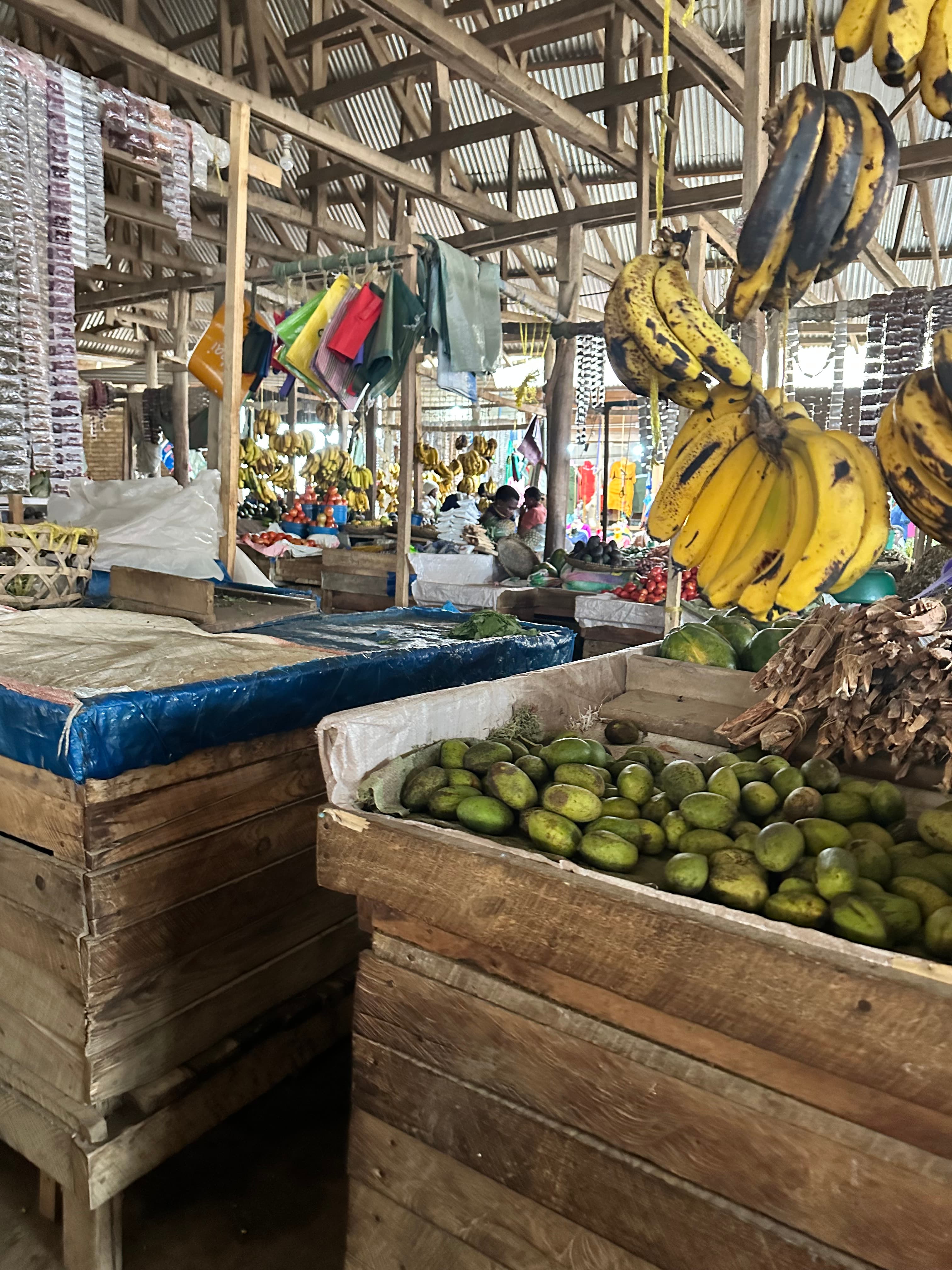
Every few days I took a tuk-tuk to the market. Produce was dirt cheap and there was decent variety but everything was seasonal; I was devastated when the mangoes disappeared. Surprisingly, I always got the local rate. I suppose there hasn’t been enough foreigners here for people to start upcharging them. Not that I would’ve minded—I don’t have the heart to haggle over a dime.
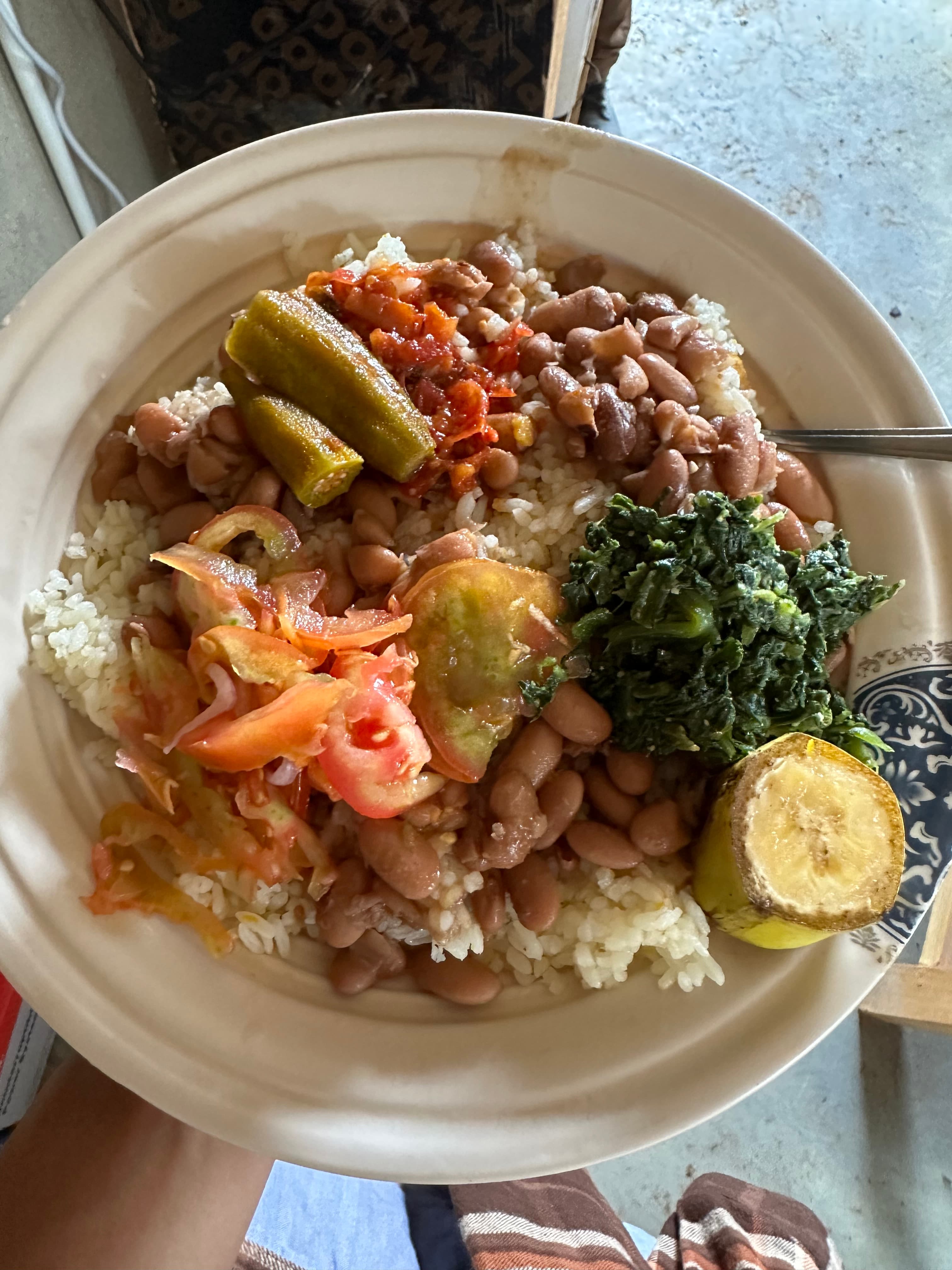
Lunch (beans and rice) was provided at the plant, but for dinner, I usually alternated cooking duties with Nico, the Dutch Engineering Manager who was also staying at the house. We managed to make some pretty decent meals.
The people of Tanzania are, with broad strokes, kind, friendly, helpful, and lively. It’s a very different vibe than American individualism, and it took some time getting used to. On my first day in the country, I went to a beach in Dar (probably the ugliest beach I’d ever seen), and a guy approached me. I’m wary of the ulterior motives of approaching strangers, and my guard was up for the entire conversation. But he just wanted to yap about my life and his photography and working in the Middle East. Afterwards, he took me to his snack stand and gave me free potato chips.
Knowing Swahili gives you a good amount of social capital. I spent two months before the trip grinding Anki flashcards, and it was genuinely a fun language to learn. Things conformed to rules to an unheard of degree. I can read any word with perfect pronounciation even if I’ve never seen it before, unlike English, and especially unlike Chinese. Swahili is a solid option for a universal language. Though I wasn’t entirely conversational, I often knew enough to get by without resorting to English, especially around purchasing goods and services and figuring out how to get somewhere.
The country itself is breathtaking. Roads wind through national parks where you can see giraffes and zebras out the window. Baobab trees dot vast plains colored a surrealist green. I took a week off work to climb Kilimanjaro and camp in the Serengeti, both really touristy but for good reason.
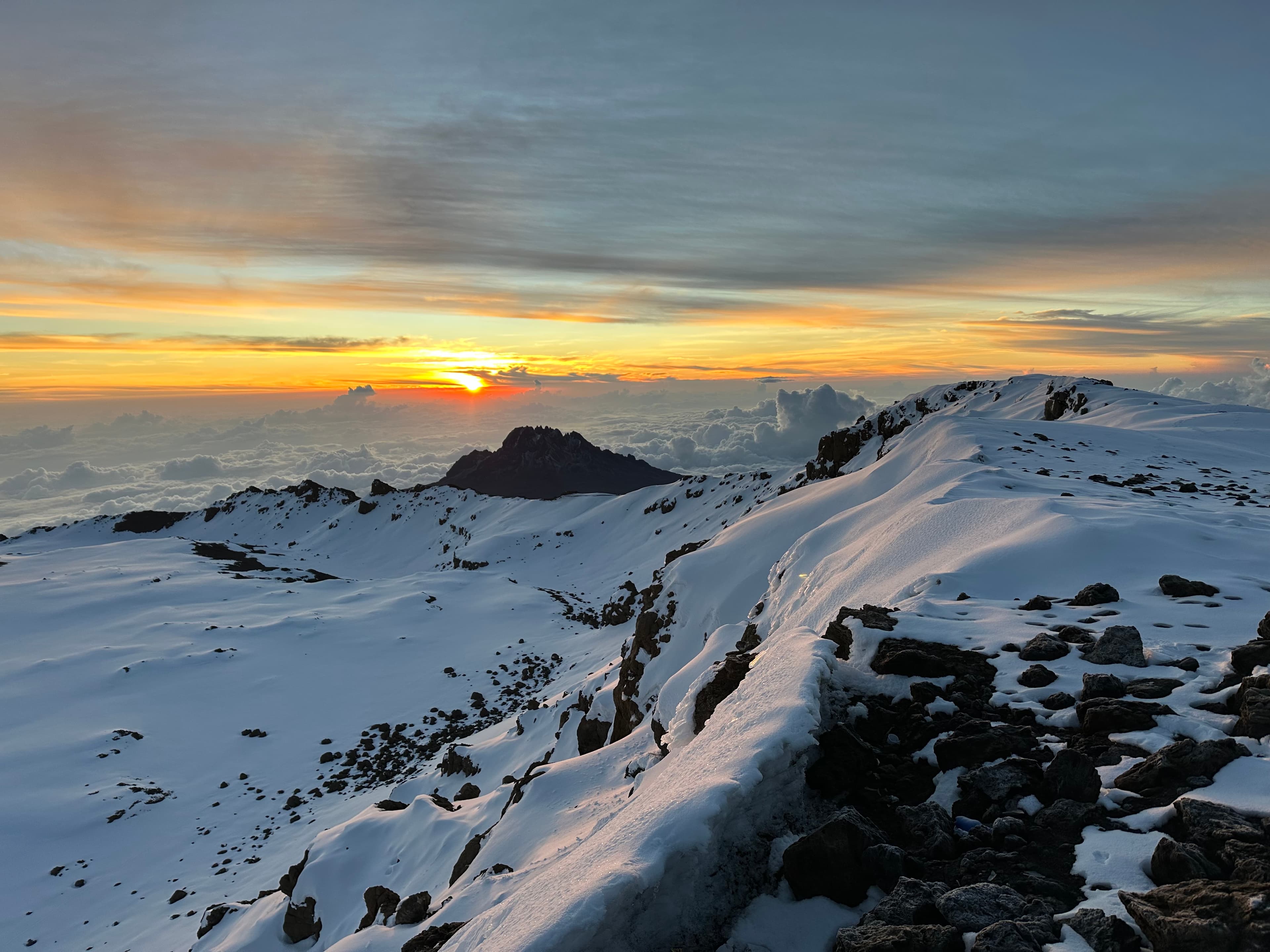
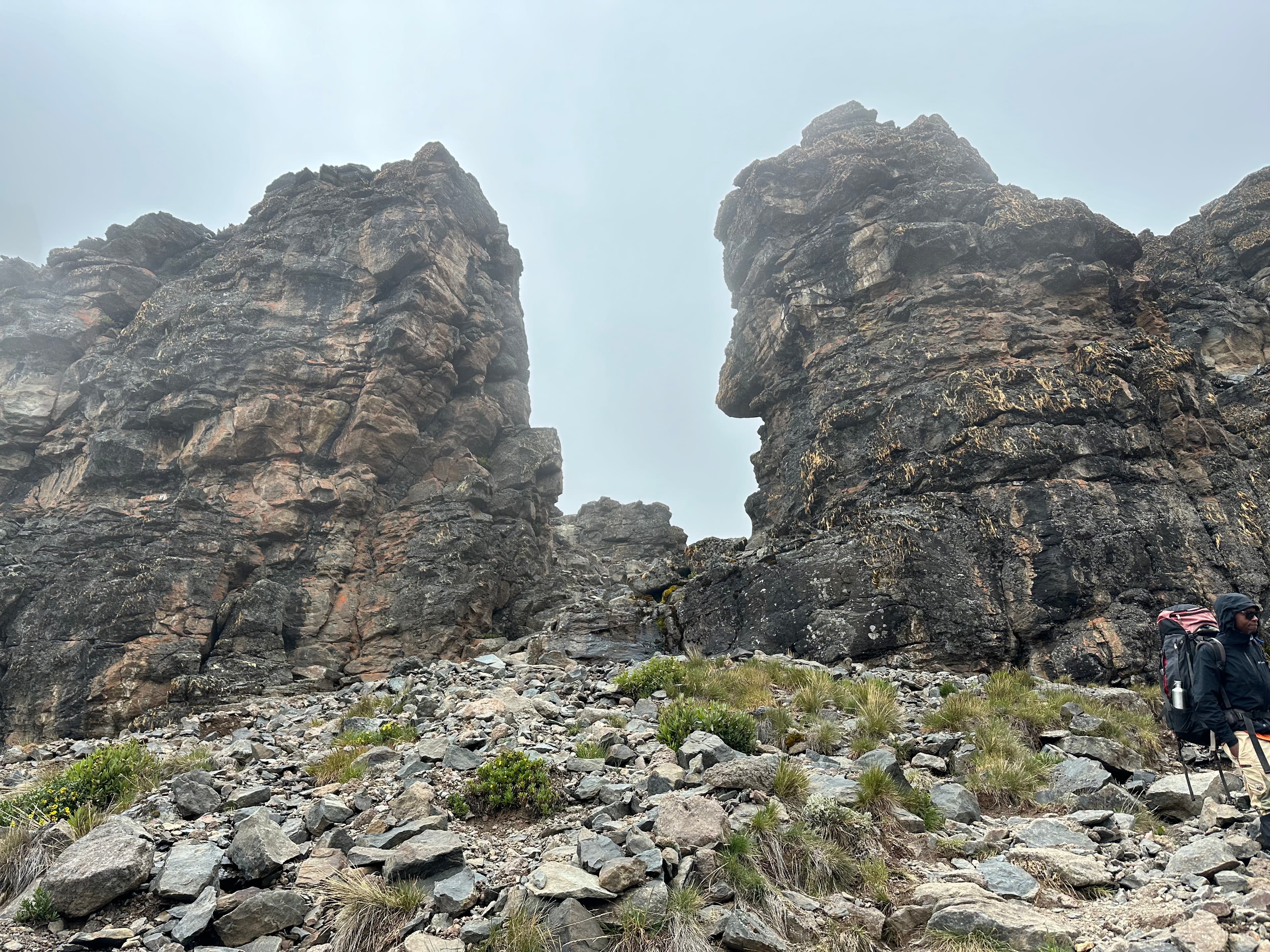
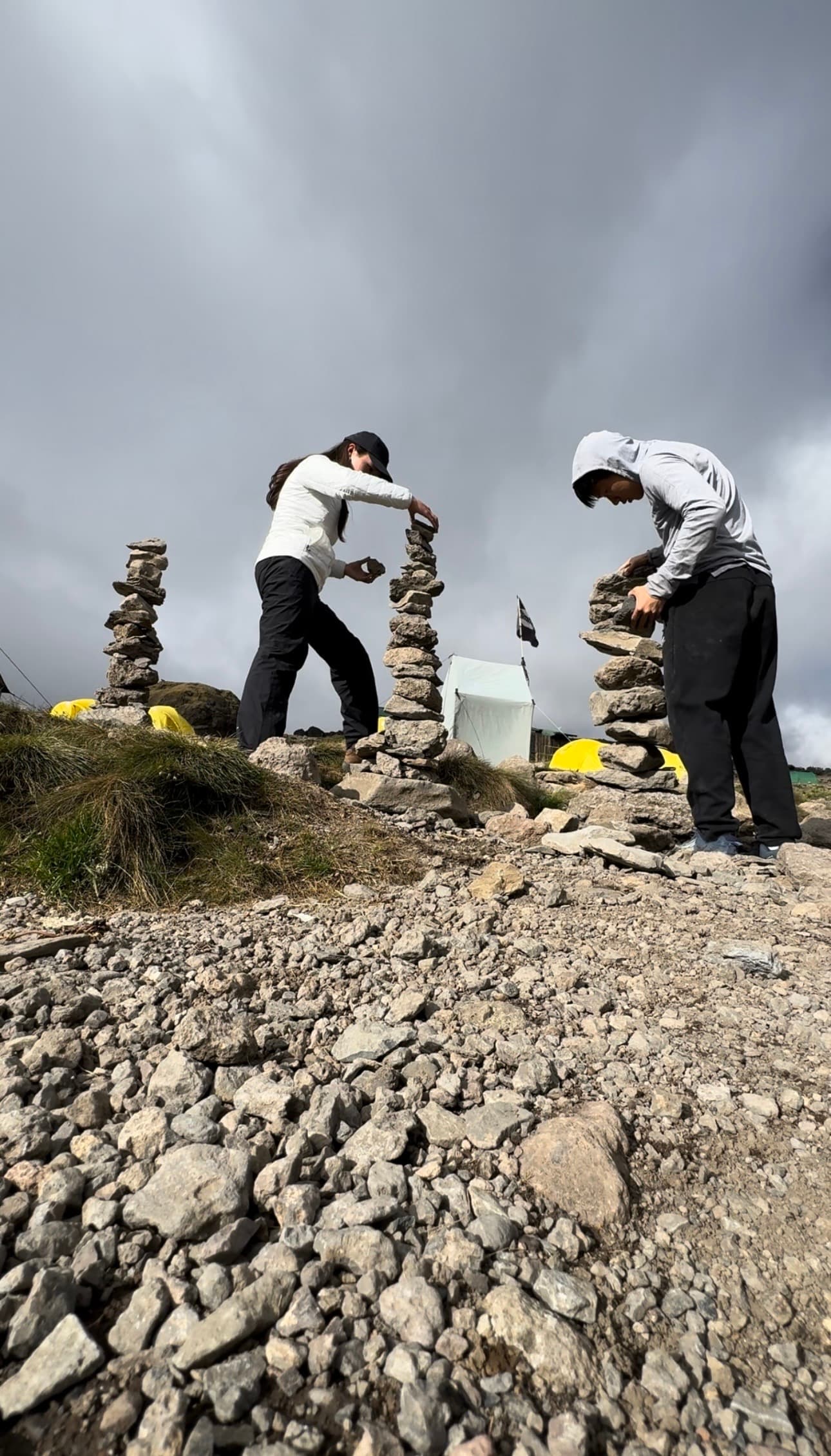
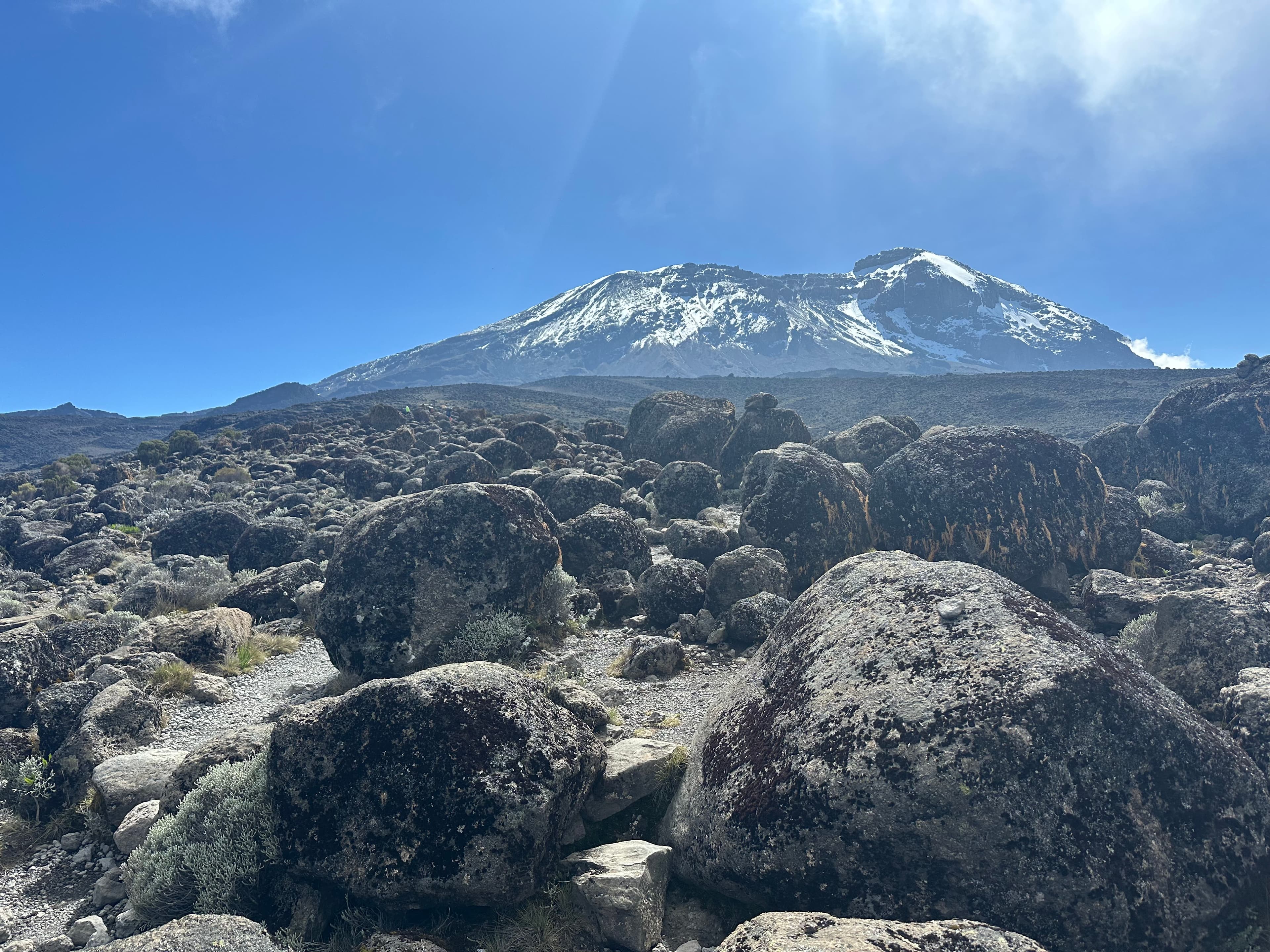
Climbing Mount Kilimanjaro
The surprises weren’t just in the wilderness. Dar es Salaam had banger Chinese food, and I went on a few weekend trips to Iringa, the big town an hour north of Mafinga. It had seemingly everything—a really good Indian restaurant, a trendy brunch spot, and even a newly opened boba place! Most of my days were spent daydreaming about my next yummy eats.
One highlight was a hike in Morogoro that wound up a mountainside, pasing through villages and banana farms. An entire village’s worth of kids began following me and my coworkers up the trail, which ended in all of us getting drenched in a torrential downpour.
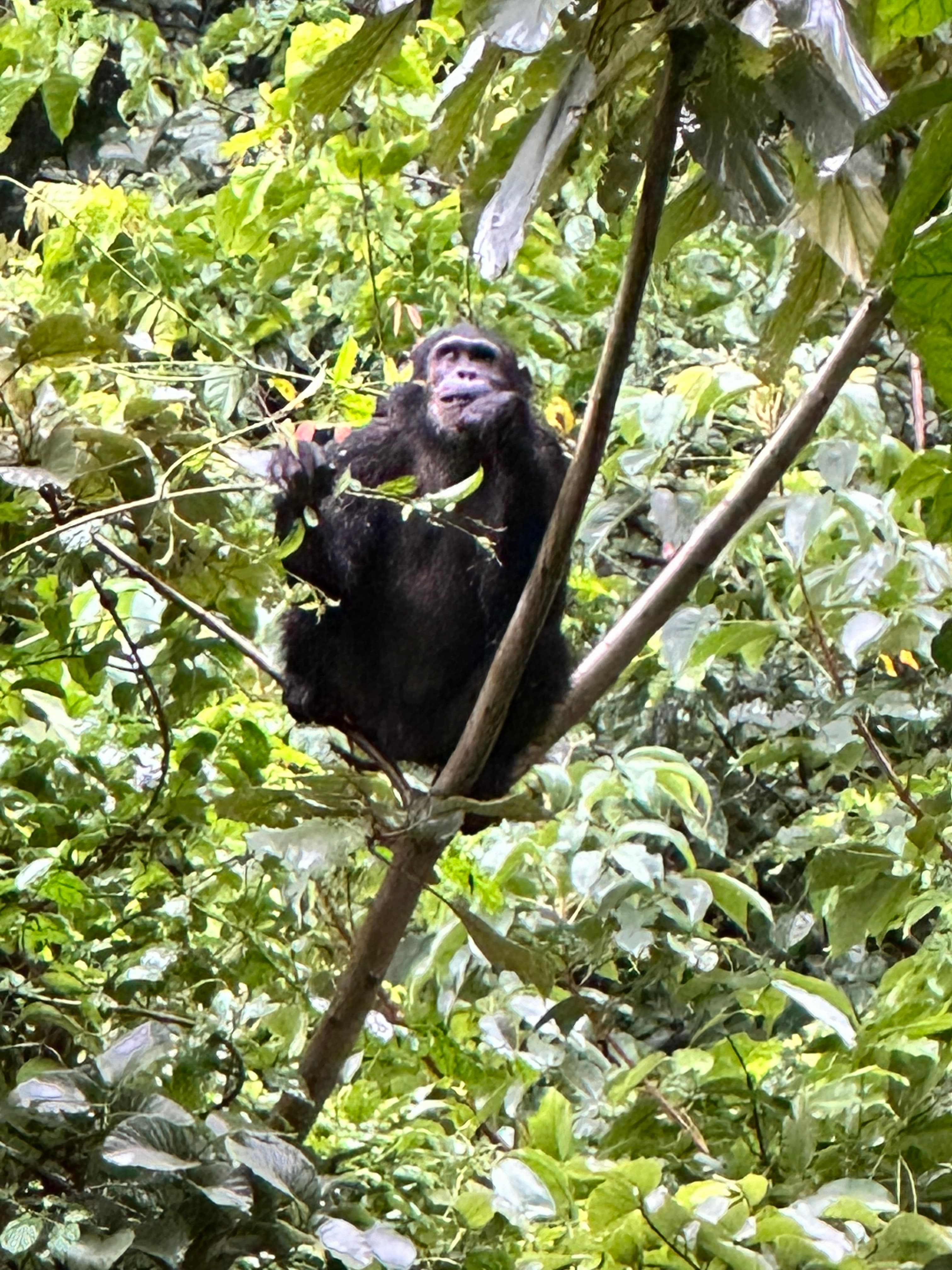
I spent my final weeks in Kigoma, in the Northwest region along Lake Tanganyika. Fortunately, I got to fly to there (in a prop plane, to the smallest airport I’ve ever seen) instead of taking a bus. Tanzanian busses are things of nightmare; they have negative legroom, last upwards of twenty hours, and there’s always more people than seats. I swam in the lake and visited Gombe National Park, where Jane Goodall lived for many years, and saw many chimpanzees in trees.
My time in Kigoma was pretty physically challenging. I went because one of the Dark Earth Carbon founders lived there, and he also ran an aquaculture farm and a honey operation. But this time the company housing lacked a working stove and the means to prepare food; and so I had almost every meal at the one palatable restaurant in town. It was beans and rice every day, twice a day. I got a bout of severe food poisoning (vomiting, fever, the whole works) that my coworkers thought might be malaria, so they tooke me to get tested at the local health clinic. It was an officially government rated one star clinic, and while I waited forever, it only ended up costing $2. America could take notes!
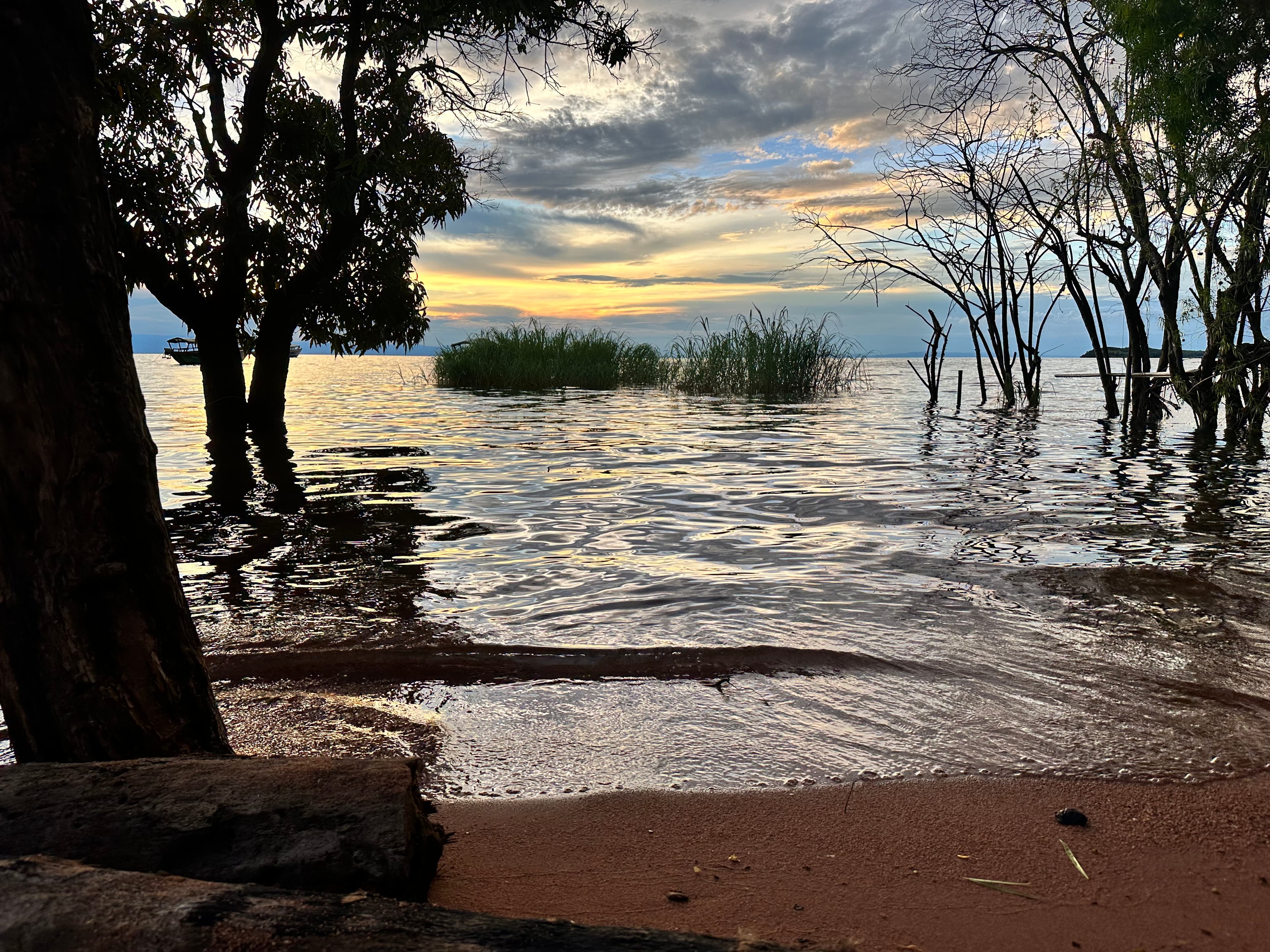
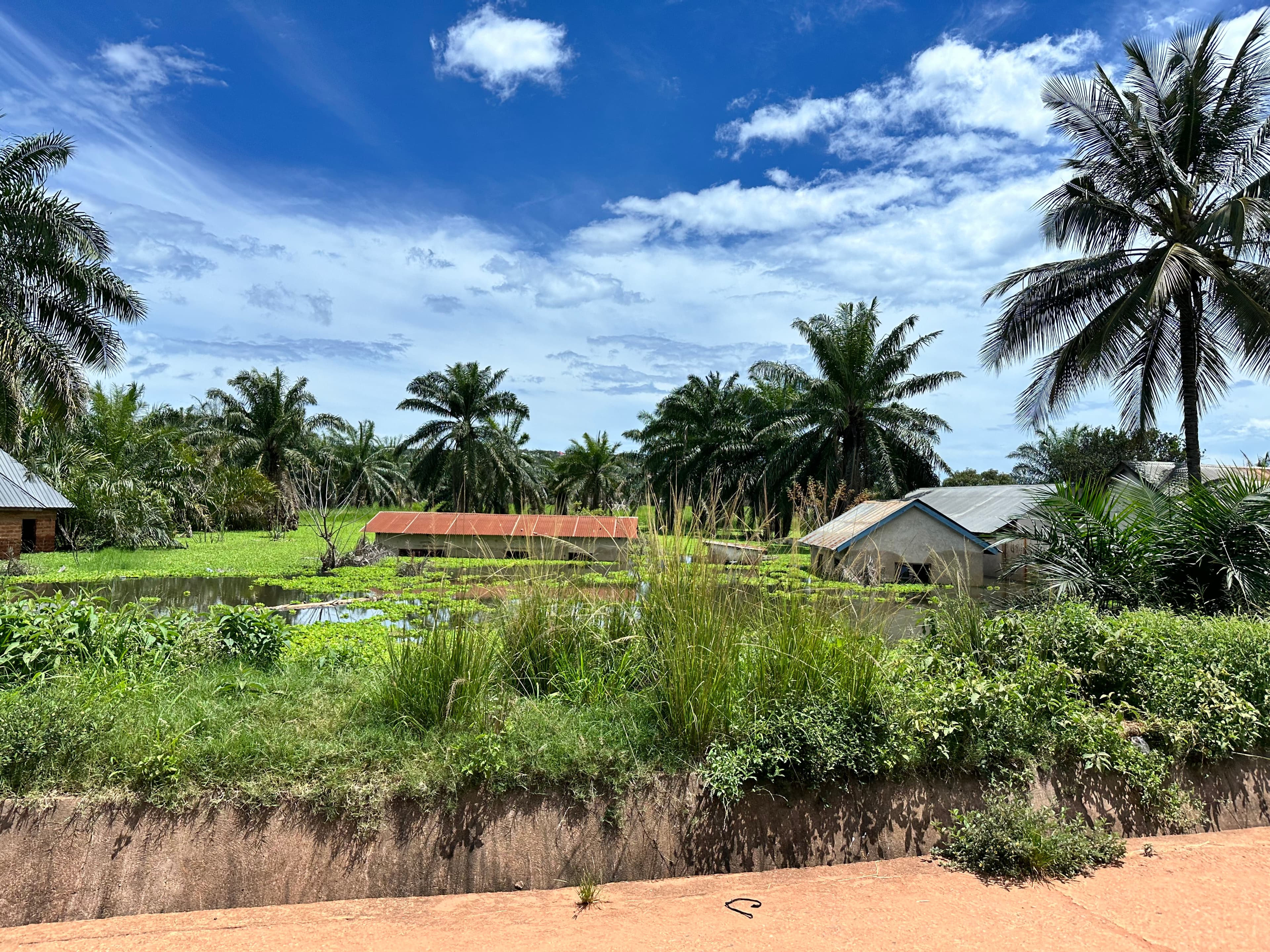
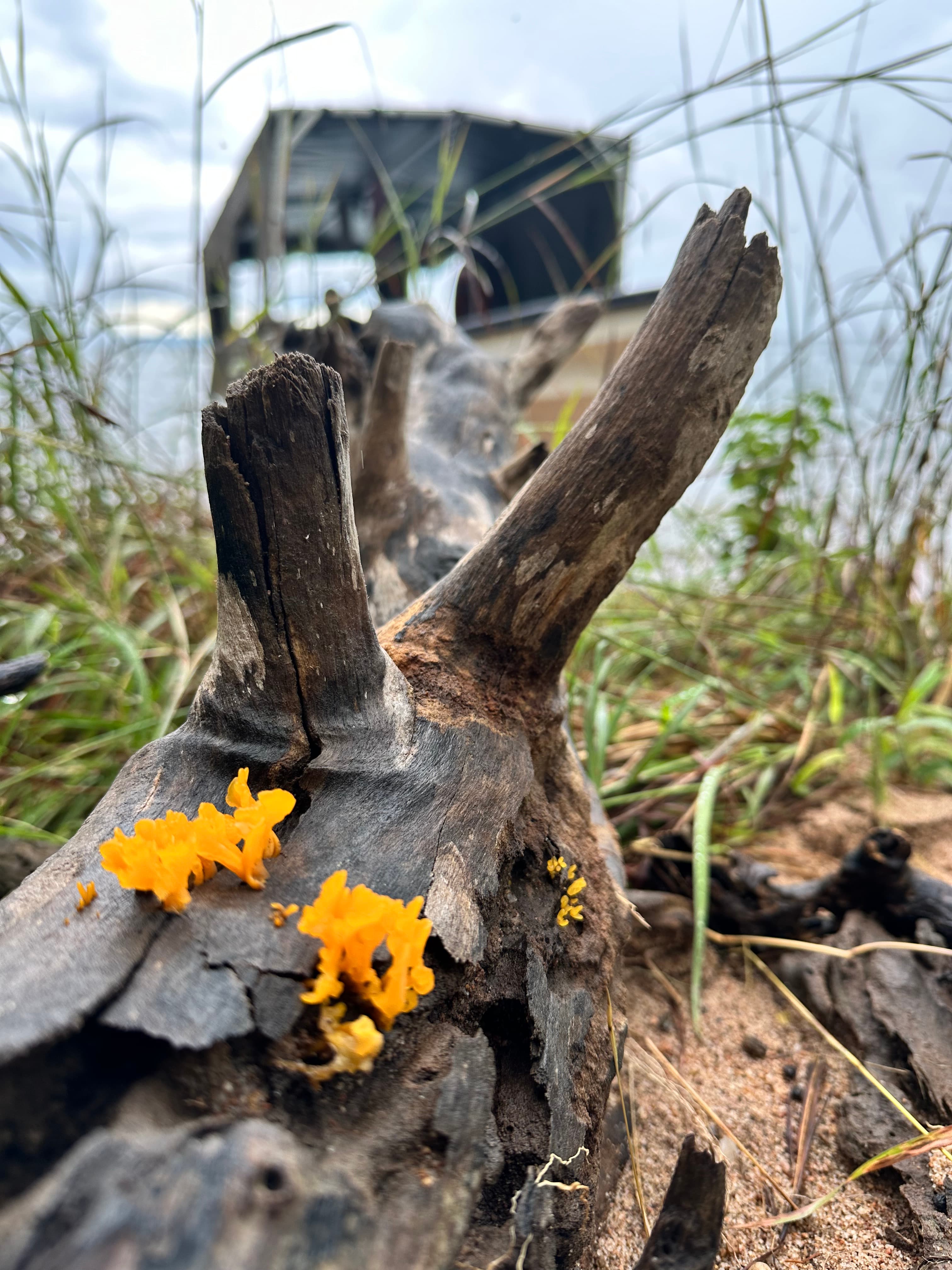
I appreciated the slower pace of life, and was happy to learn that the hedonic treadmill could run in reverse. The strength of man lies in his ability to adapt; and it wasn’t long until I no longer yearned for the amenities of modern living. I learned to live with cold showers and mosquitoes and rolling power outages.
But I won’t lie—getting back home, 'Murica had never hit so hard.