My friend Tal and I finished the Three Passes Trek in 10 days in April 2025. Well, at least I did—Tal got acute mountain sickness and had to be helicoptered out halfway.
When I was planning the route, I wasn’t entirely sure if it could be done. A typical itinerary takes 18 days, and the fastest I’d seen online was Mac from Halfway Anywhere’s 13-day hike (which was a great resource).
Take this travelogue as a data point for what’s possible, not what’s recommended. My trip included a day climbing Lobuche, one of the easier 6000m peaks, though still one of the hardest things I’ve ever done. I could’ve also comfortably squeezed in a hike to Everest Base Camp; but instead I spent half a day in Lukla helping evacuate Tal.
Acclimatization is the limiting factor. The upper bound of safe is 500m of gain per day, with a rest day after every 1000m. We stretched beyond that and felt the consequences. If you’re already acclimated you can go much faster—we met a trail runner that set the fastest known time for Three Passes at 23 hours.
I wouldn't recommend bringing too much or planning too much. Check out my gear list below - I packed generously and had a 7lb base weight. There's plenty of room for error, so just send it!
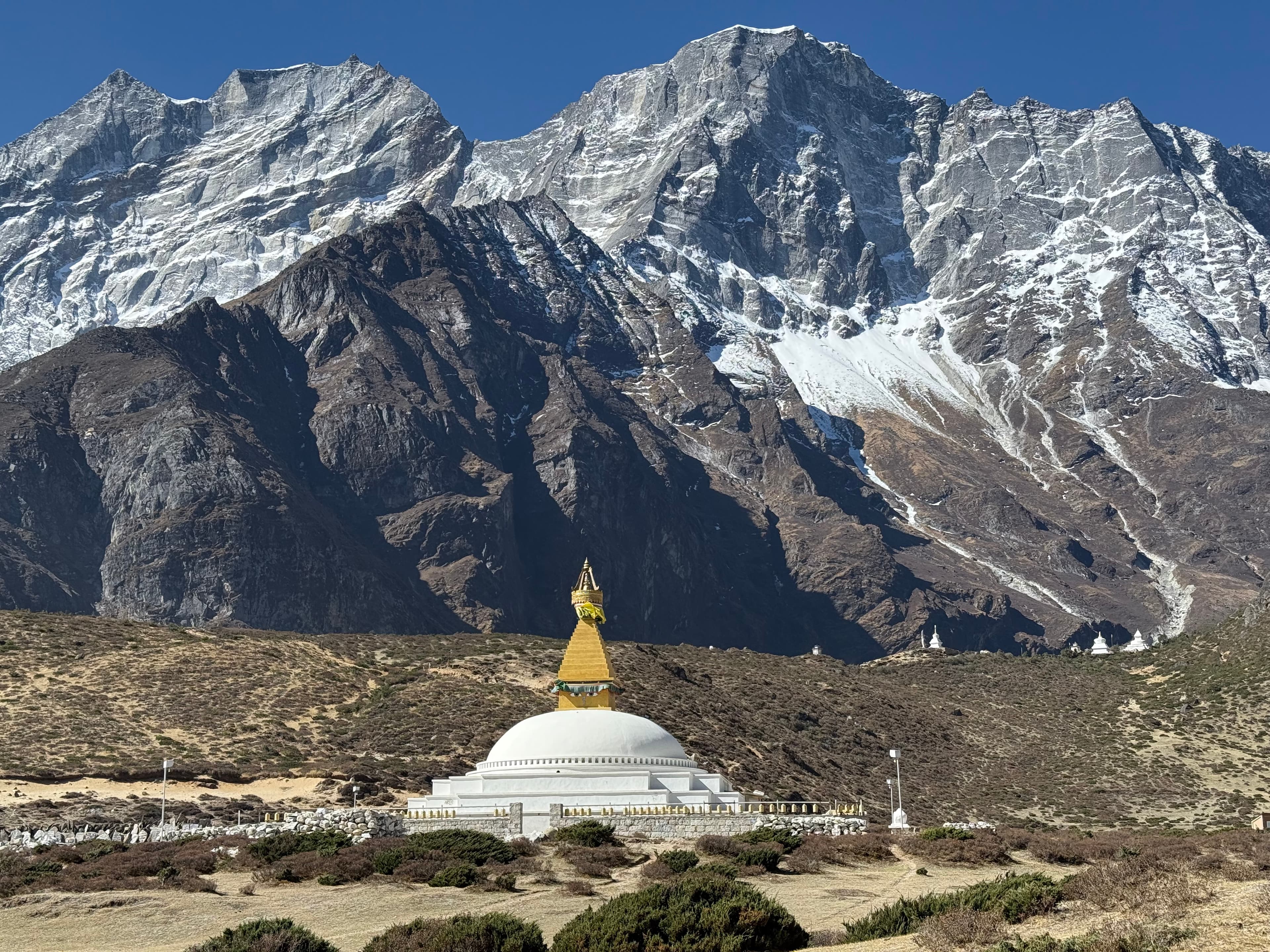
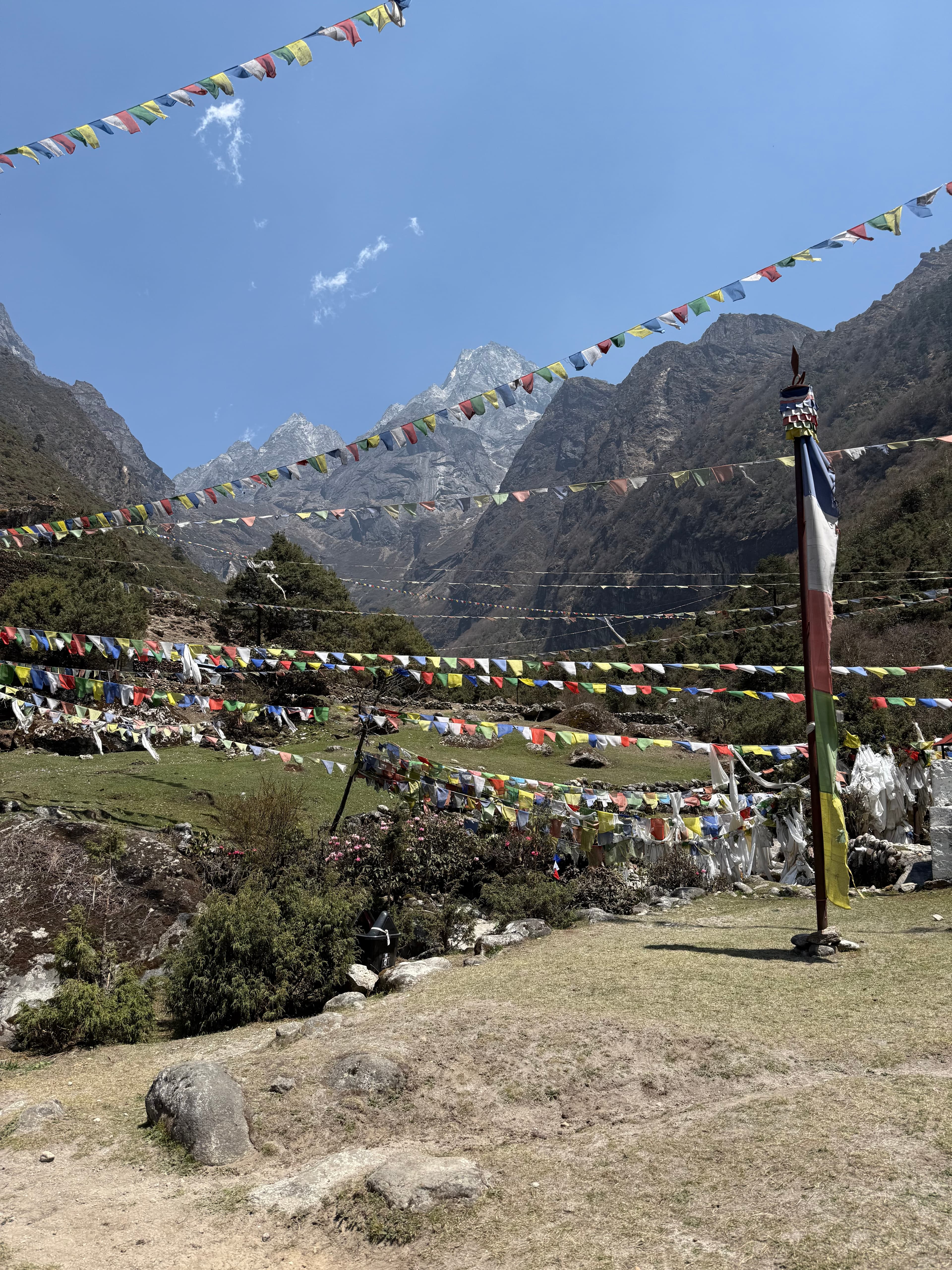
The hike itself is pretty chill, with not that much mileage to cover every day and plenty of time to stop and smell the yaks and bathe in the majesty of the Himalayas.
Itinerary
Day 1: Lukla to Namche Bazar
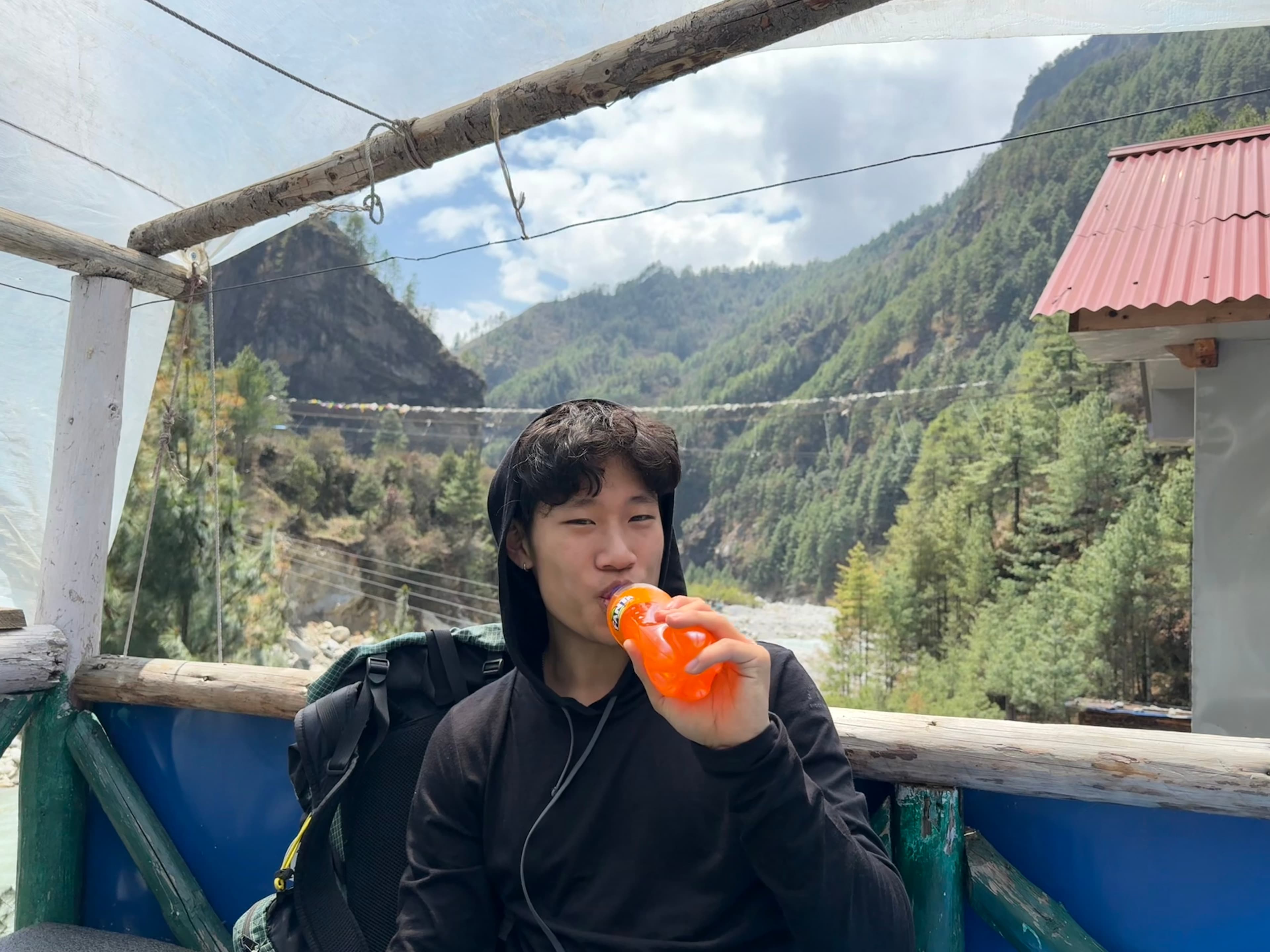
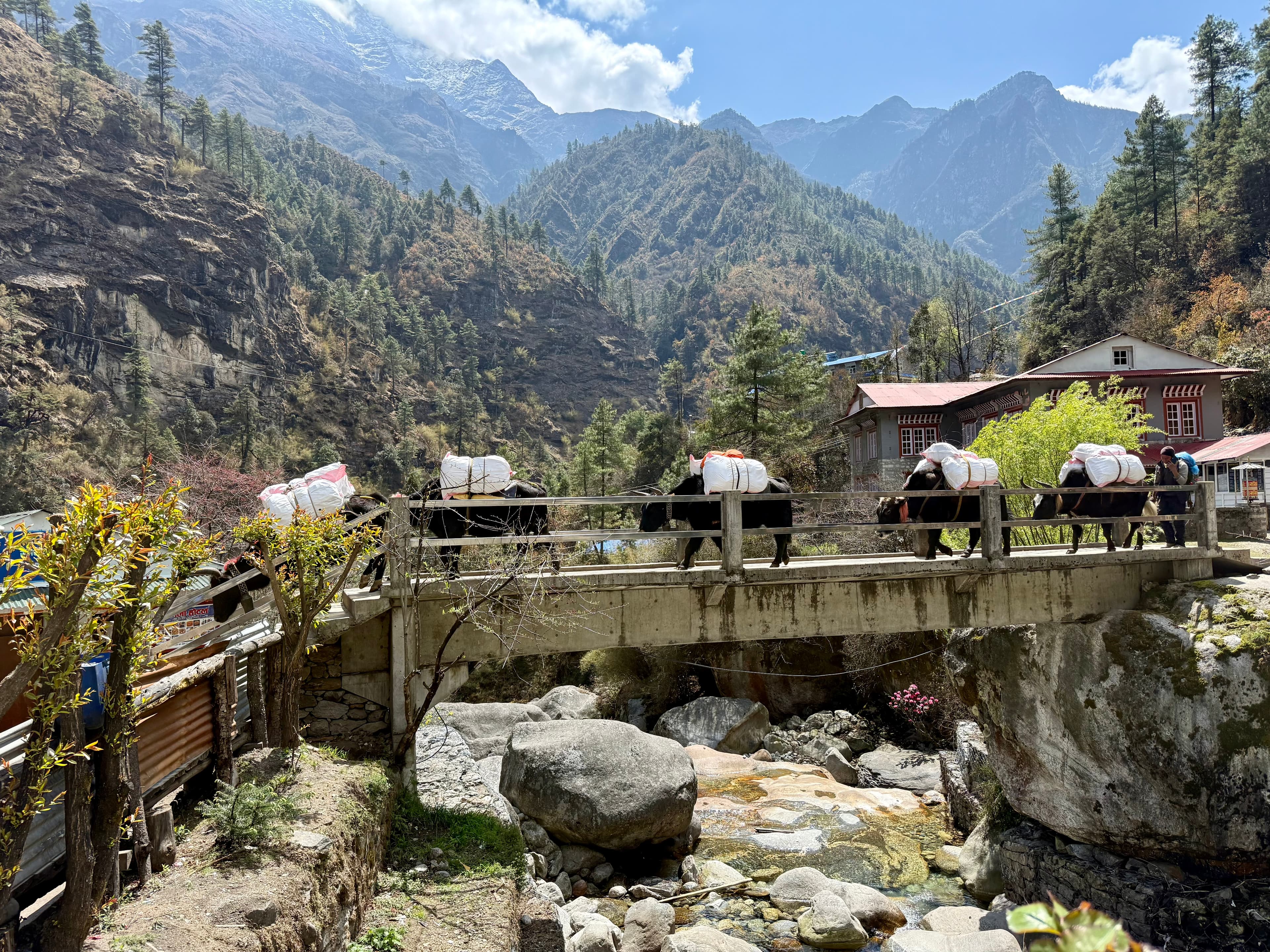
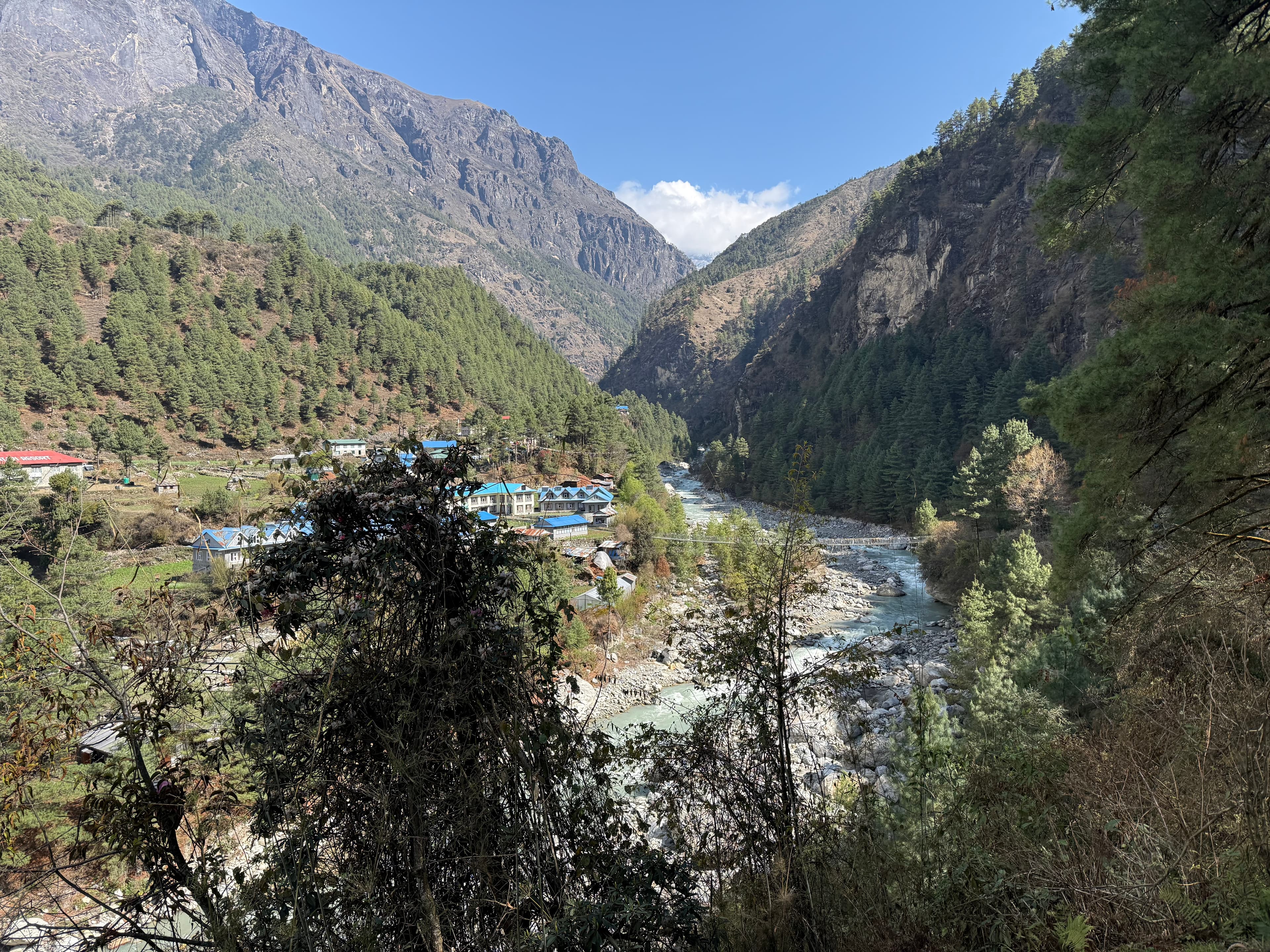
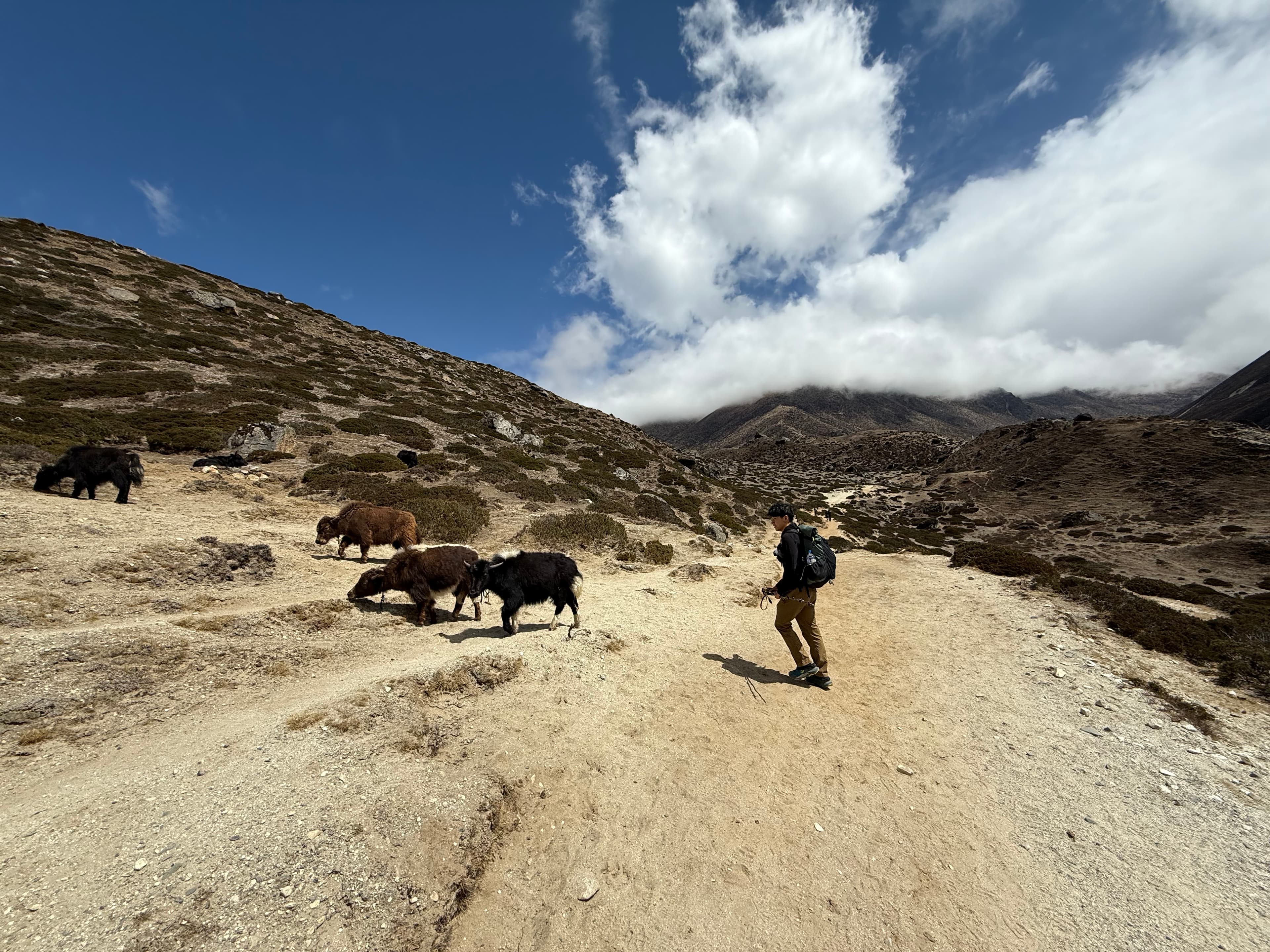
We left Lukla after brekkie. Nepal is stunning! But this part of the trail is so highly trafficked—we wove between tour groups and yak convoys the entire day. Being around so many people breaks my sense of rugged adventure, so i'm excited for the second half of the hike, when we split off from the Everest Base Camp trail and get to enjoy some peace and quiet.
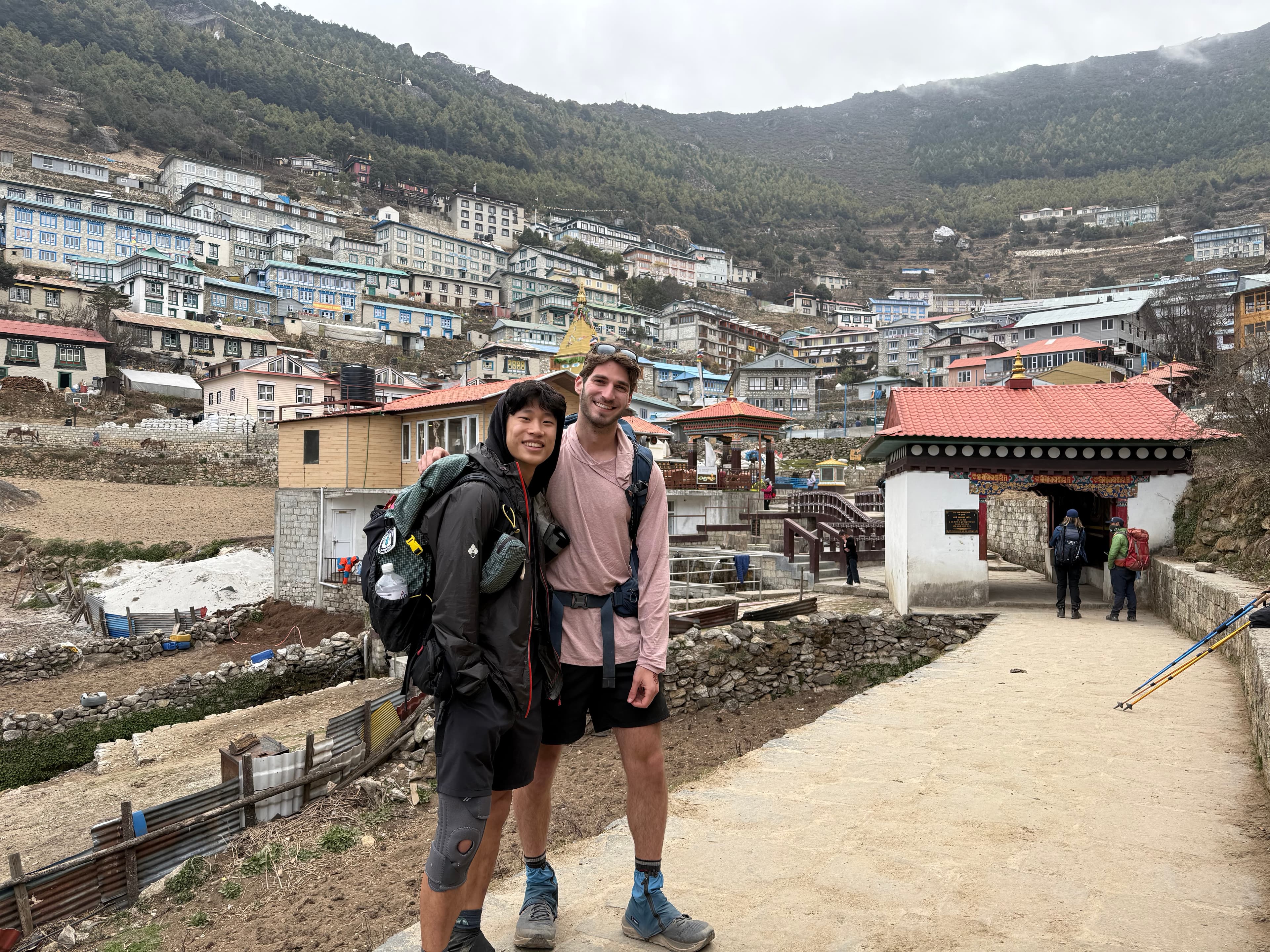
The final three kilometer climb into Namche Bazar was at 20% grade. I struggled and really felt the altitude. That said, the rest of today was easy hiking. We got held up at a checkpoint ten minutes south of Namche Bazar for over an hour - the line was incredibly slow and most people had guides that waited for them ahead of time. Sadly, Tal lacked the free will to simply walk by the checkpoint, so we waited. We stayed at Nirvana Home, and it was quite clean and satisfactory (and the owner's dad is the last surviving member of the Everest Expedition). But there's no shortage of options in Namche.
Day 2: Namche Bazar
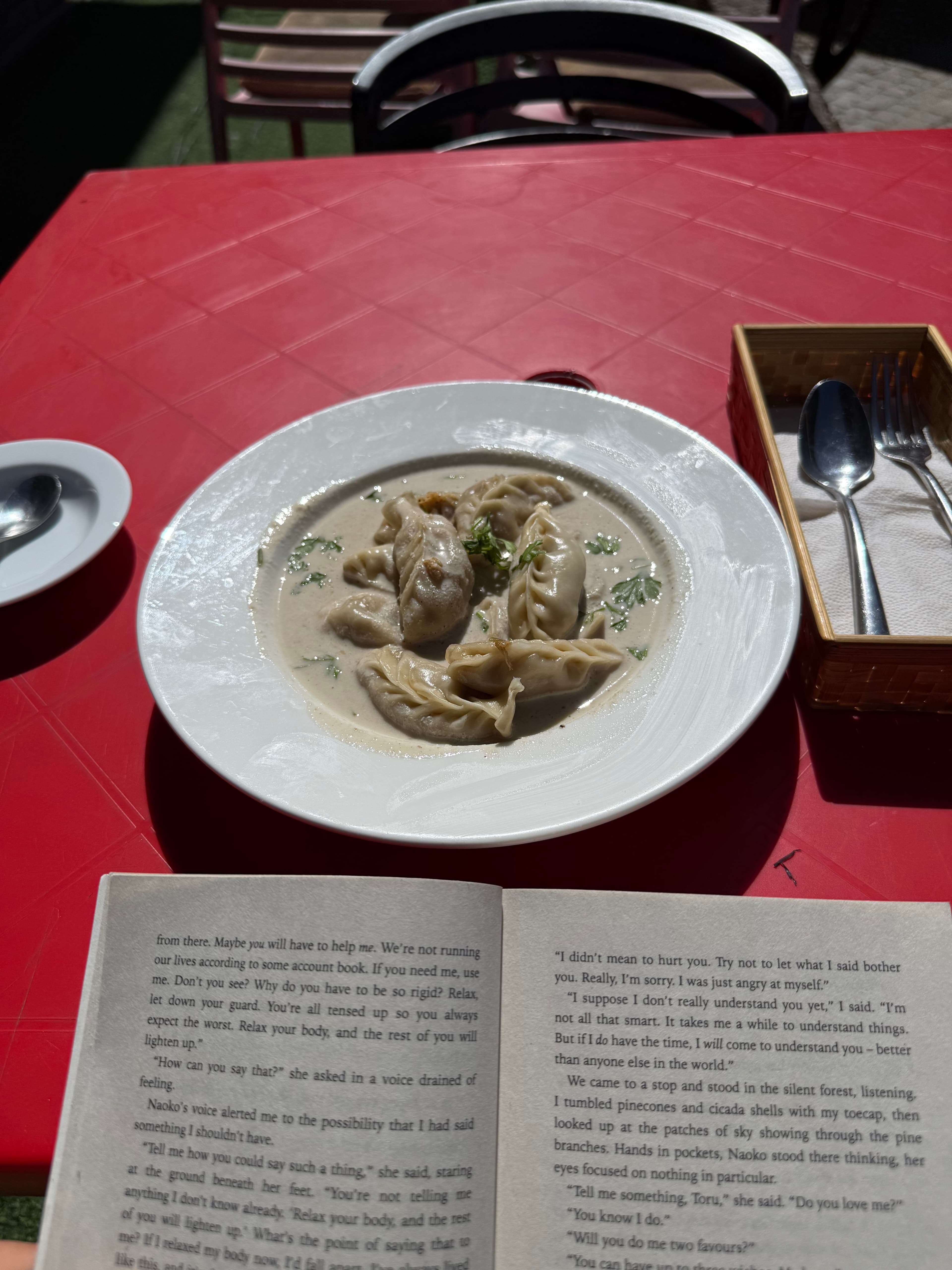
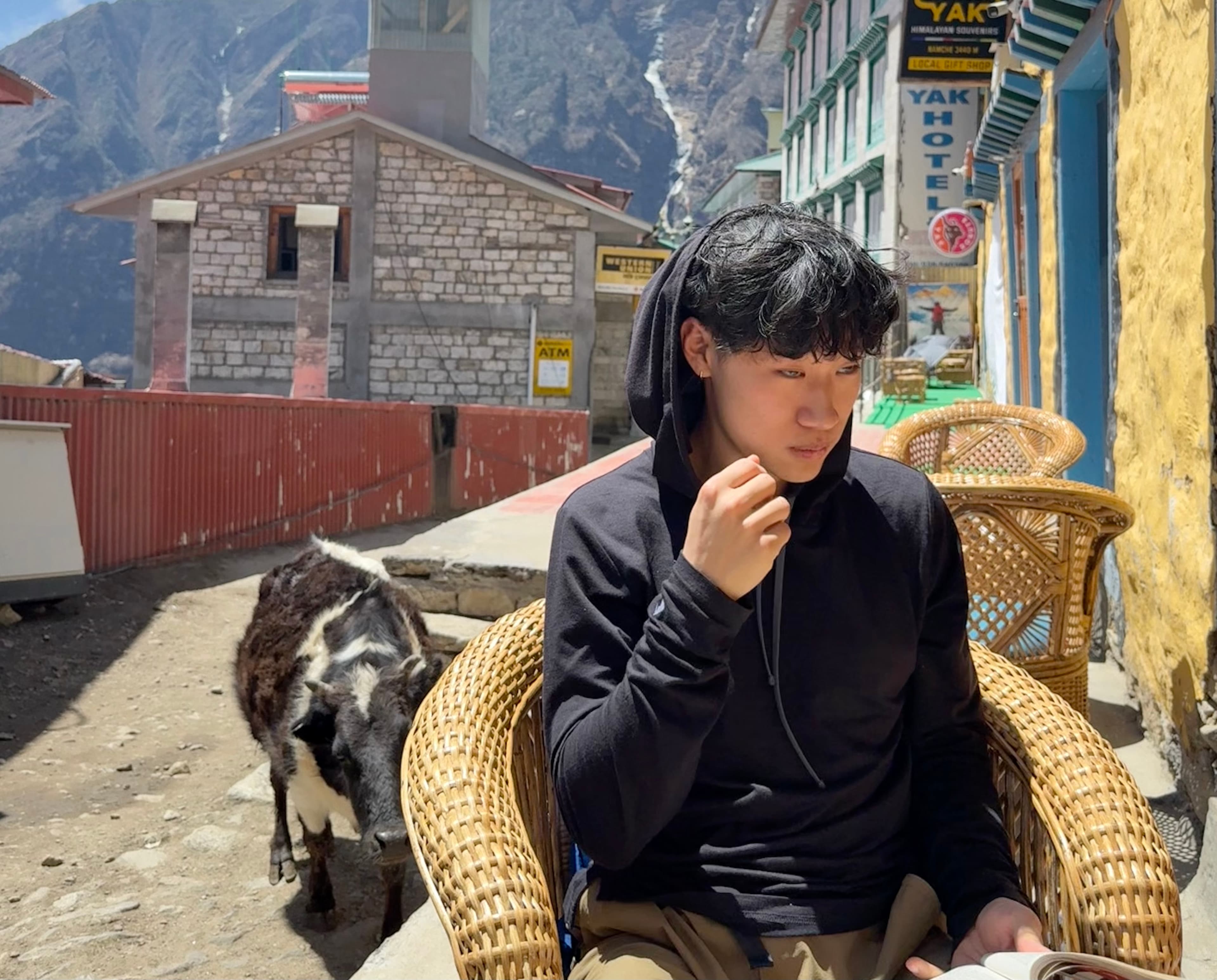
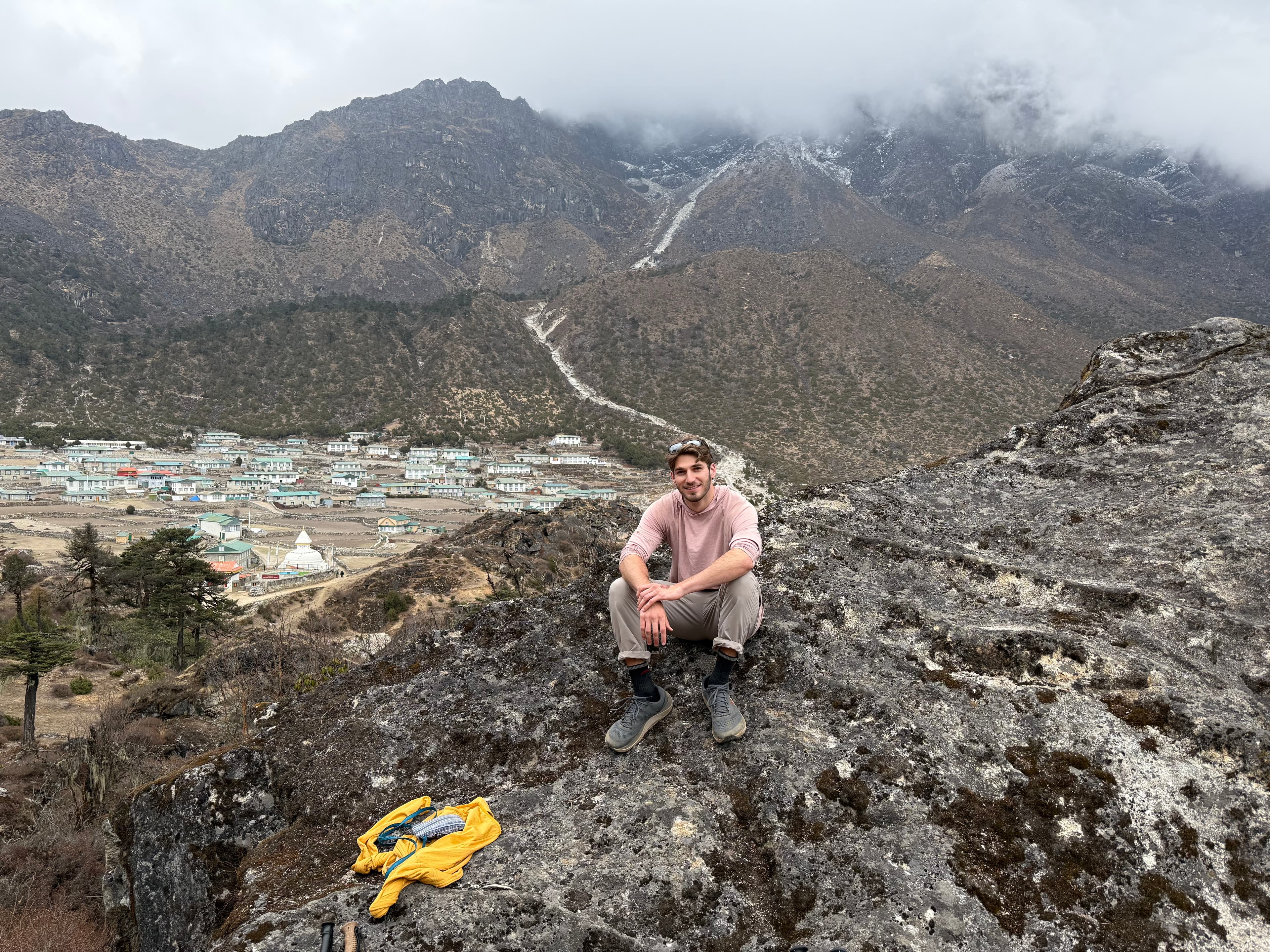
This was a chill acclimatization day. I woke up, had some delish momos for breakfast and a coffee at YakBuck, and did some light reading. In the afternoon, we did a short hike to Khumjung (elevation: 3790m), a village with a monastery containing a yeti skull.
Feeling pretty good about the altitude so far!
Day 3: Namche Bazar to Pangboche
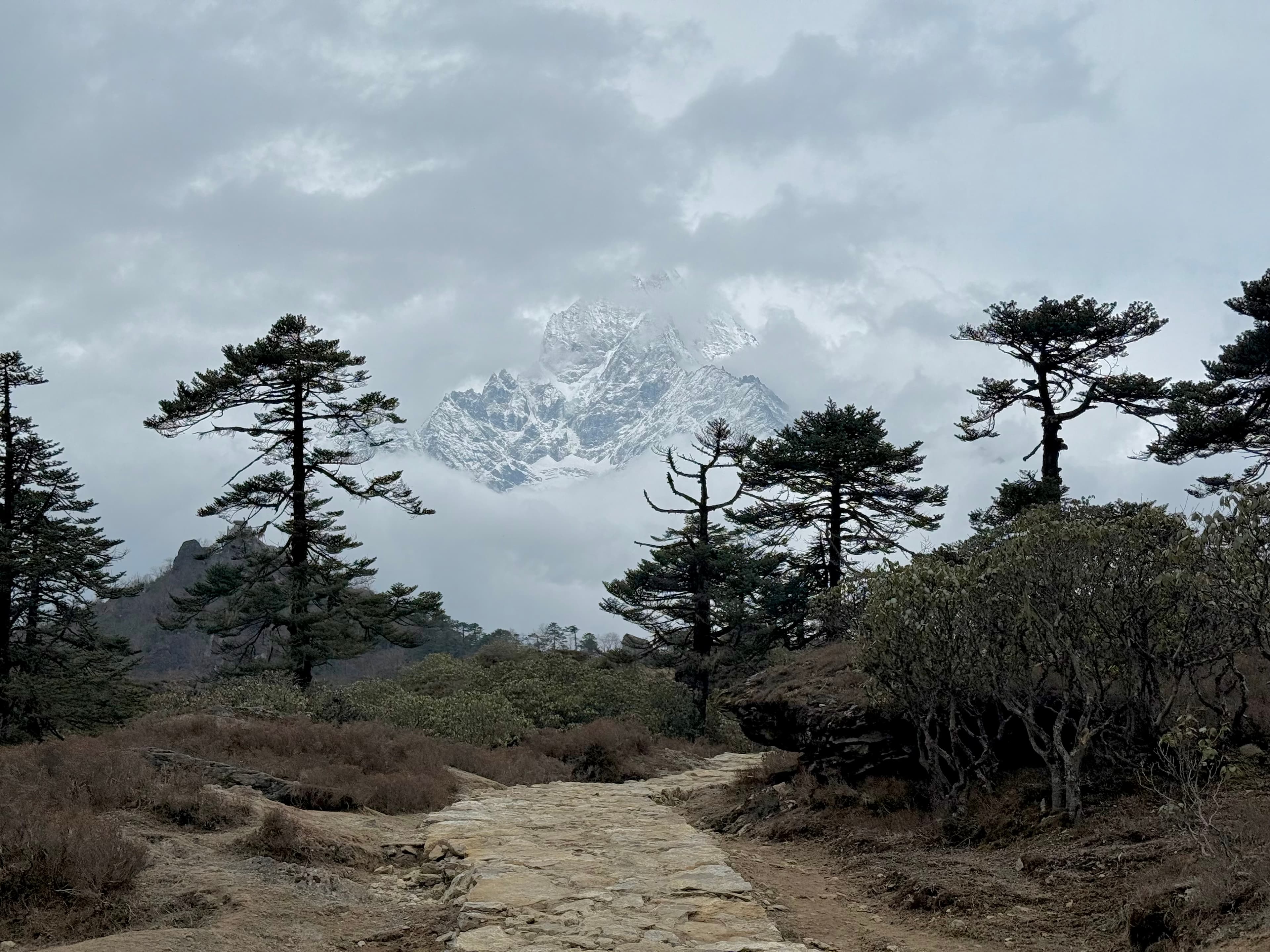
We caught some beautiful morning views of Everest, though Tal and I agreed it wasn’t quite as striking as we had imagined. There's just too many tall mountains in the Himalayas! It’s hard to stand out. The hiking was far better. This section of the trail, while still too populated, felt less like the subway rush hour of Day 1.
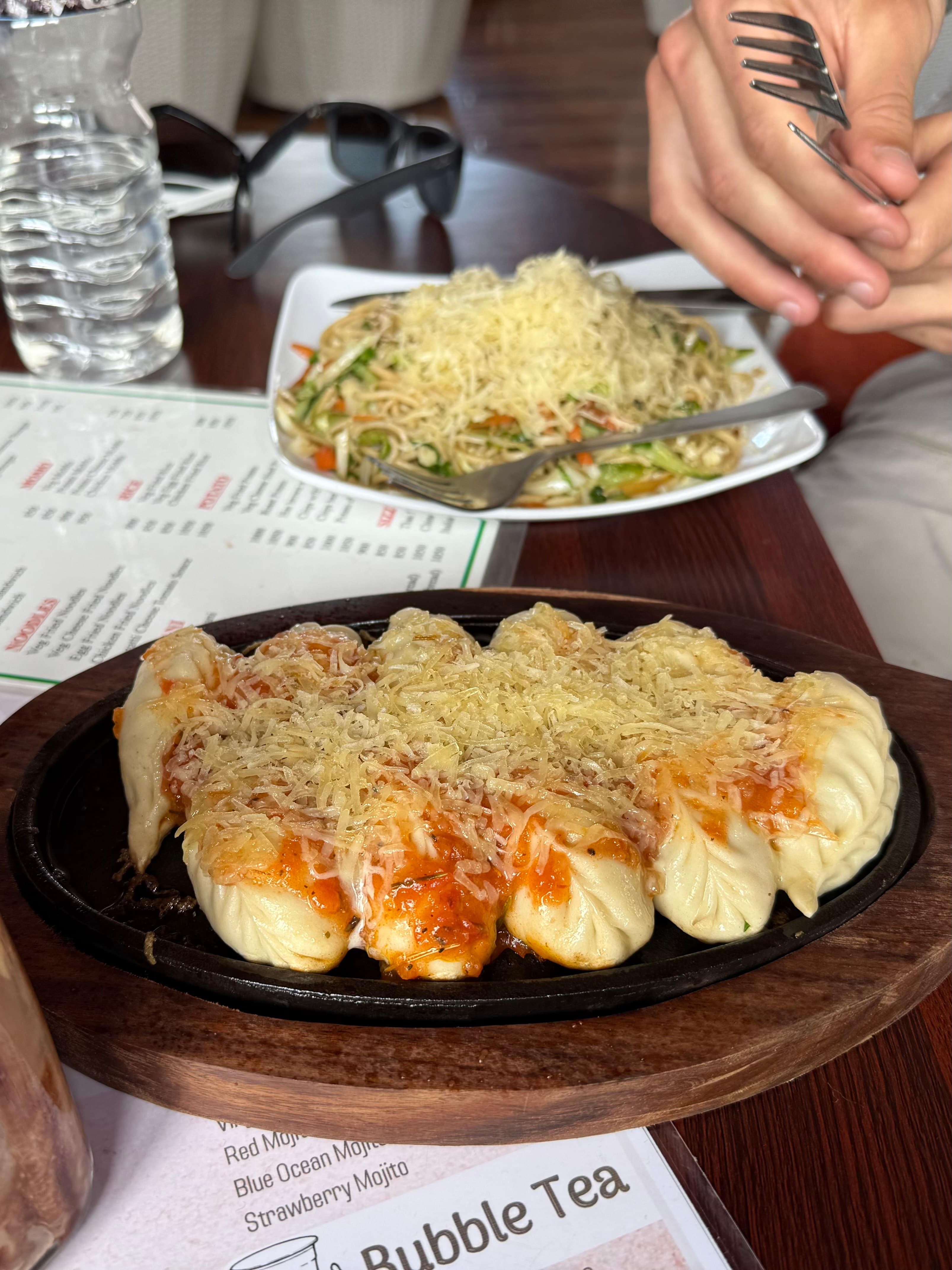
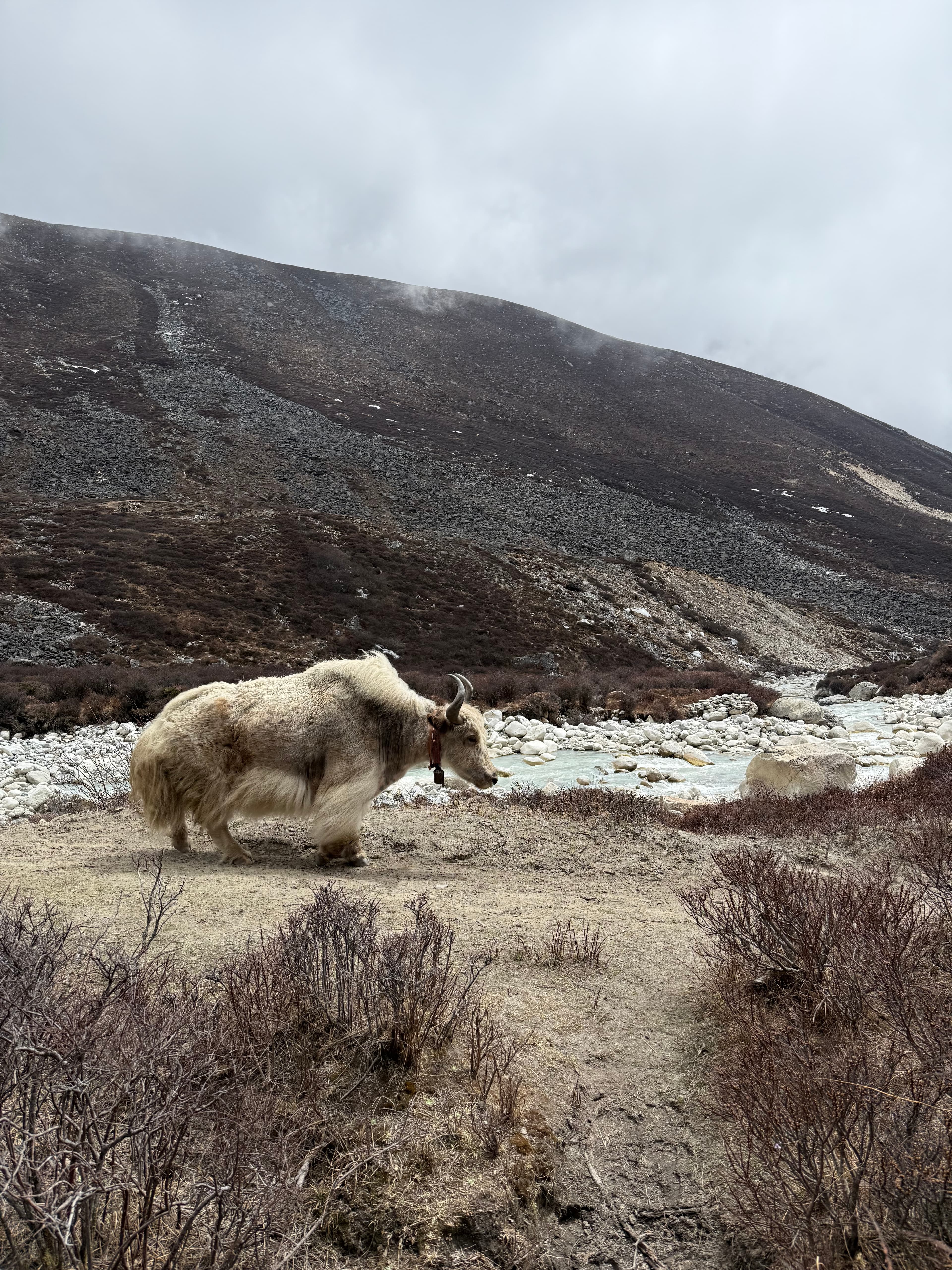
We got to Tengboche just before 11am and had lunch there with two of Tal’s friends who were coincidentally also trekking the three passes. Our cafe overlooked a monastery and opened into sweeping fields where yaks rested in the grass. I got a momo pizza for lunch, and then read for an hour before starting the final push to Pangboche.
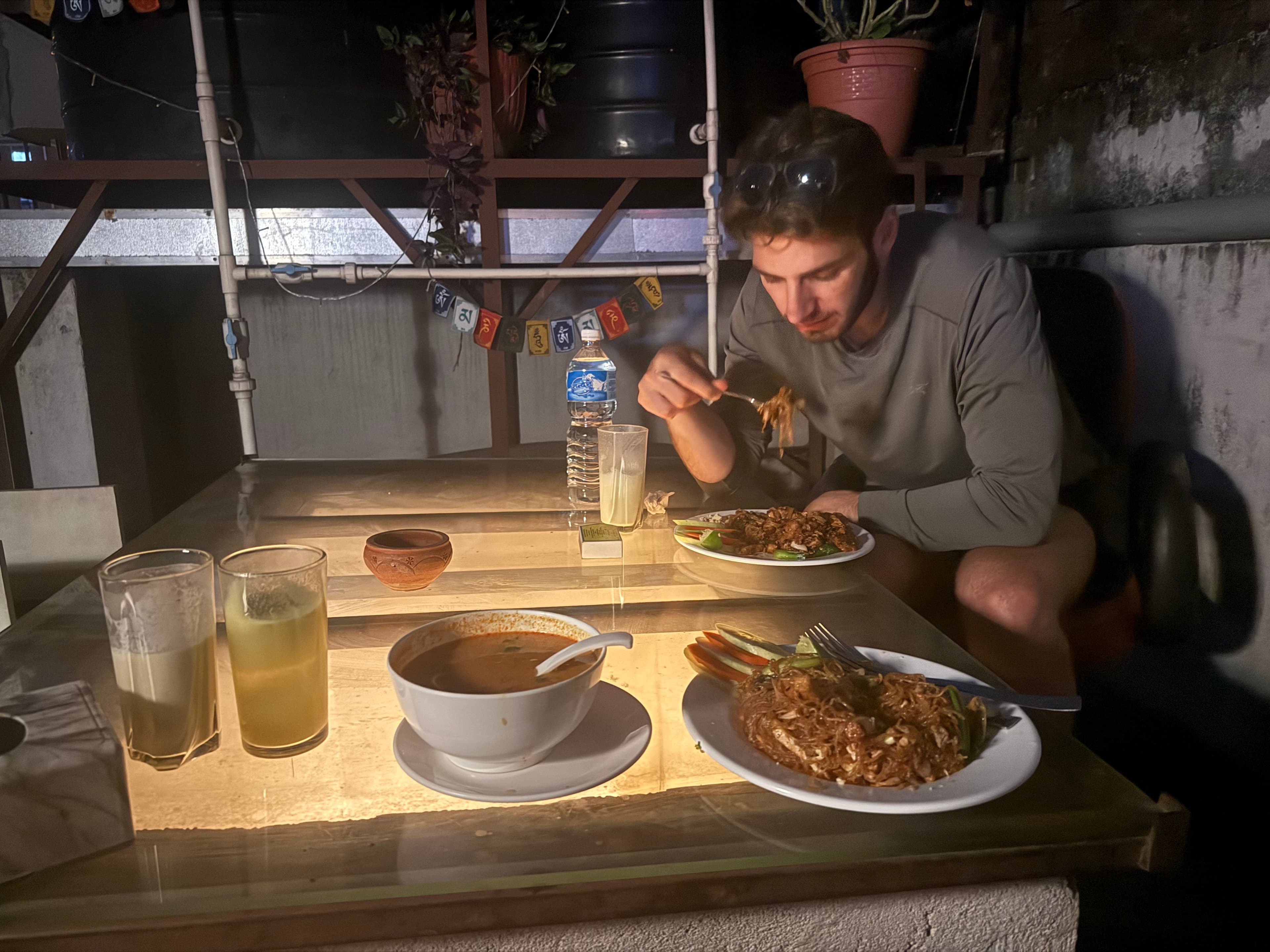
We stayed at the Beyul Alpine Cottage, booking a room with a private bathroom and hot showers for 2,500 rupees. The showers were underwhelming—lukewarm at best, with weak pressure that left part of you in the cold—but still, hard to complain given the setting.
I felt the altitude a bit (faint headache) during the second half of today, but am doing pretty well in that regard.
Day 4: Pangboche to Chukhung
Our original plan was actually to acclimate in Dingboche, which would’ve been the correct decision. But we arrived in Dingboche at 10:30am and it felt wrong to end the day so early. So we enjoyed a long lunch and left at 1pm, pushing for another six kilometers to Chukung.
We felt pretty good at Dingboche, but I started getting a headache in the afternoon and had to stop multiple times. My headache was quite bad once we got to Chukung, and I spent the rest of the day lying down and sleeping (save an hour when I dragged myself to the kitchen for food).
Day 5: Chukhung
I spent all day suffering indoors from altitude sickness. When I had the energy, I read Norwegian Wood; otherwise I just slept and ate. Tal was unscathed.
Day 6: Chukhung to Lobuche via Kongma La Pass
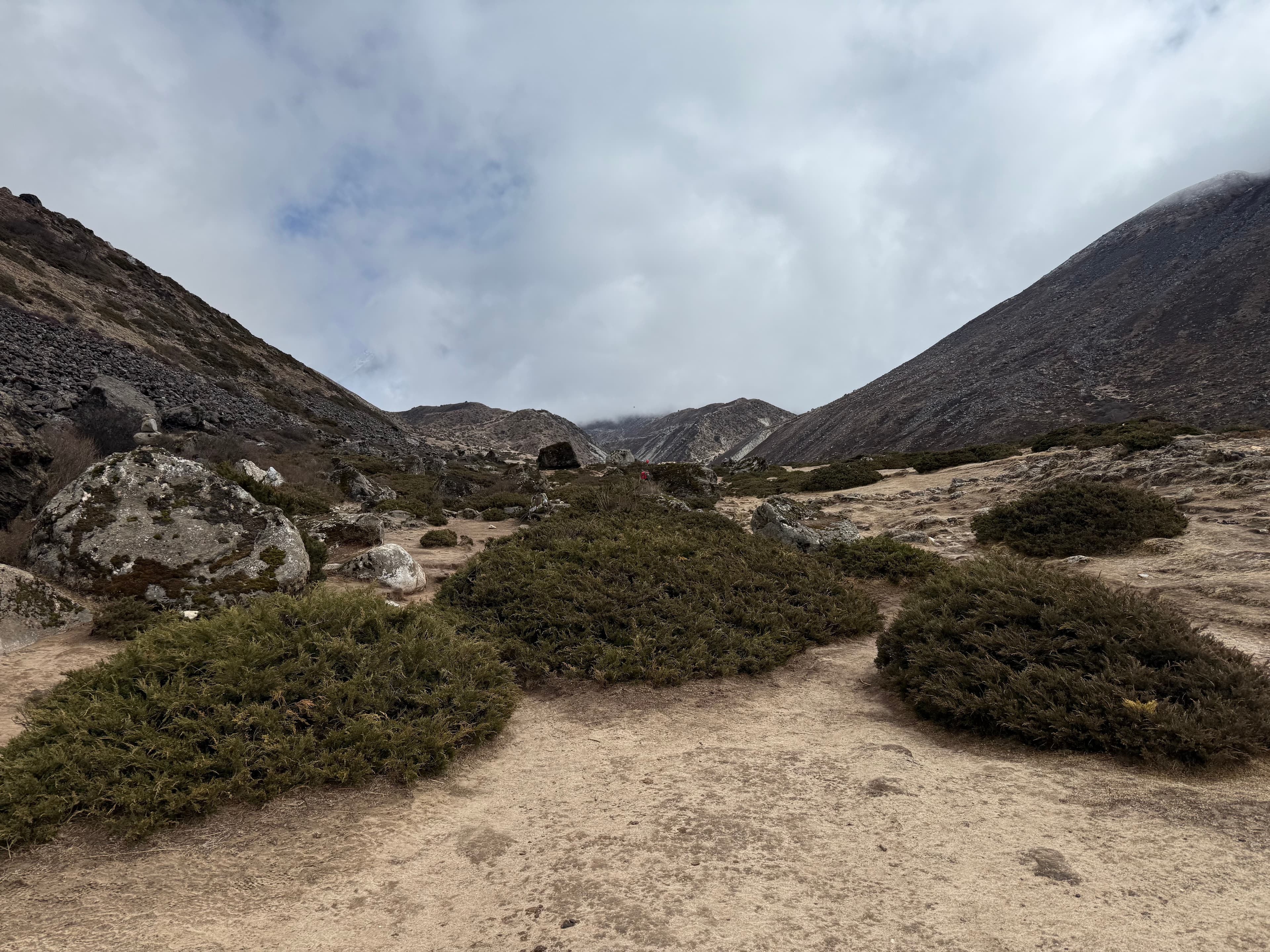
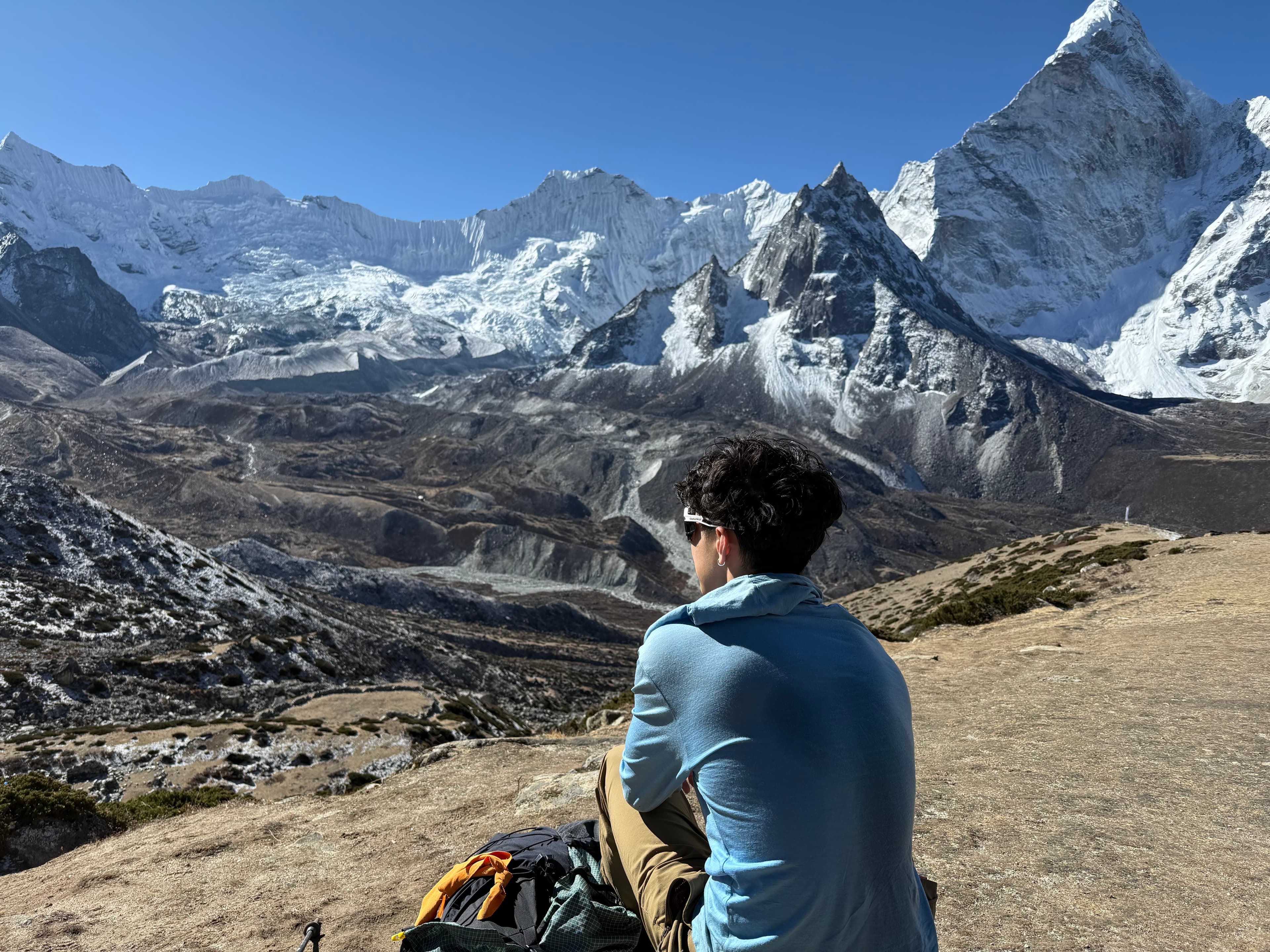
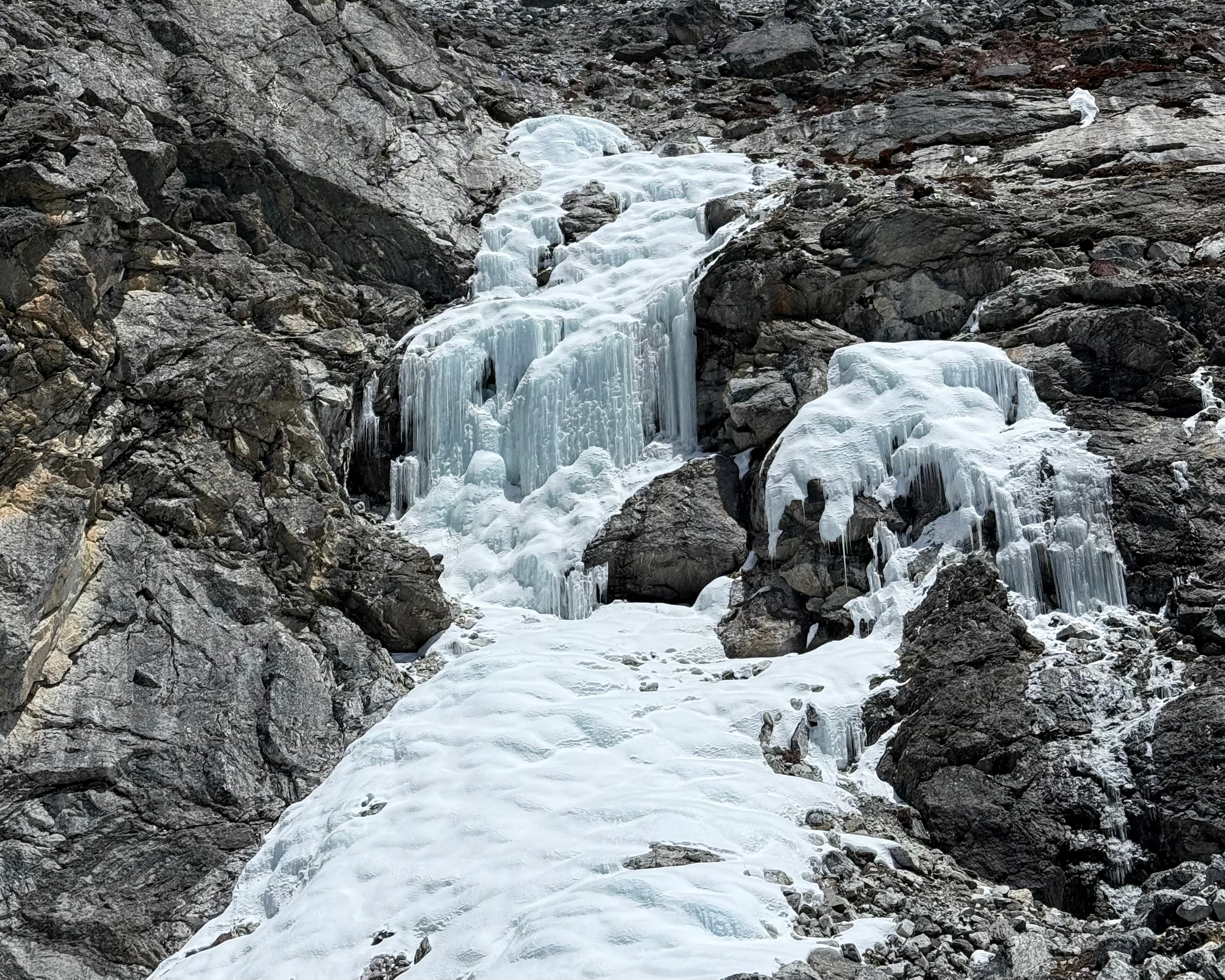
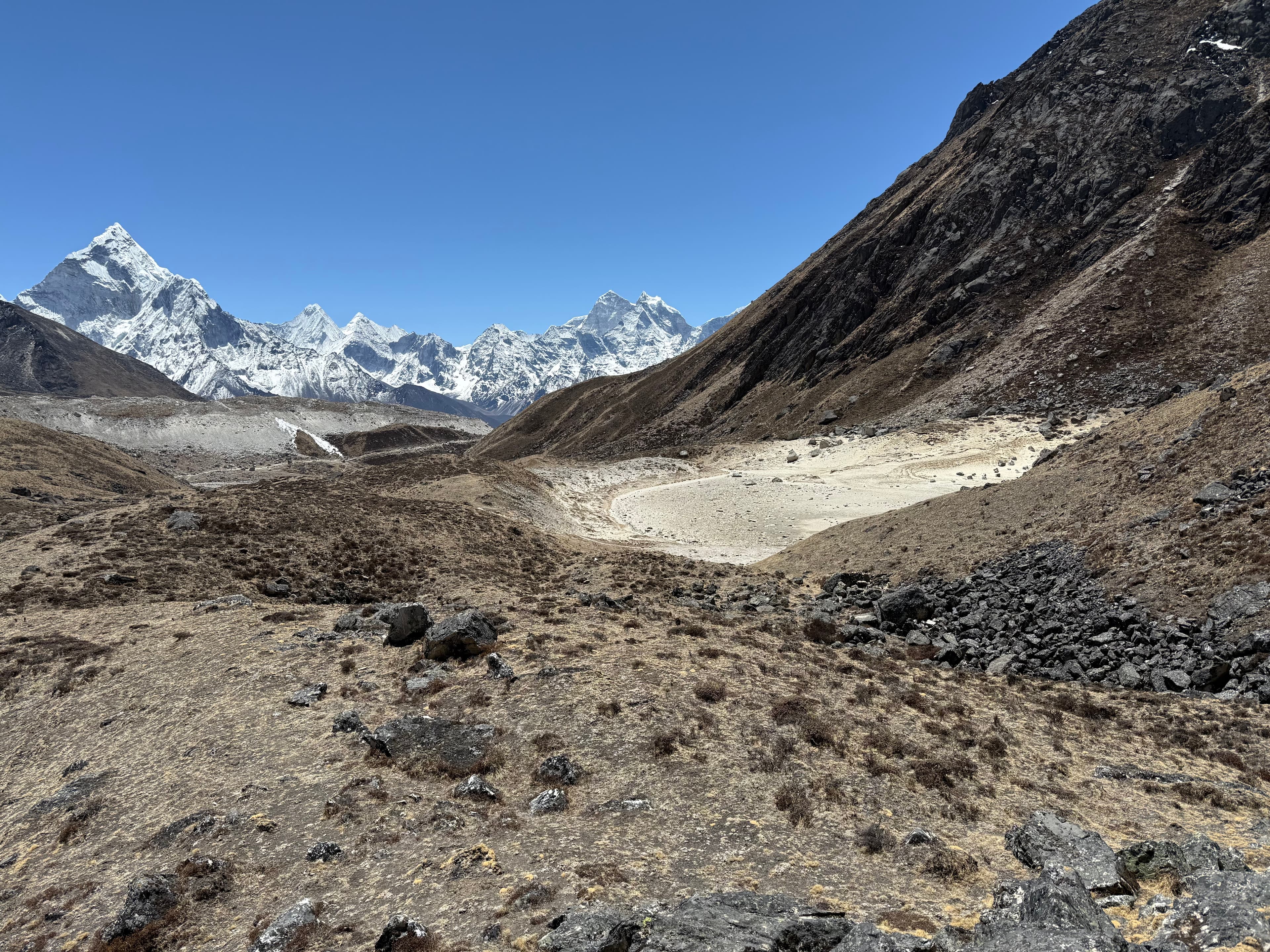
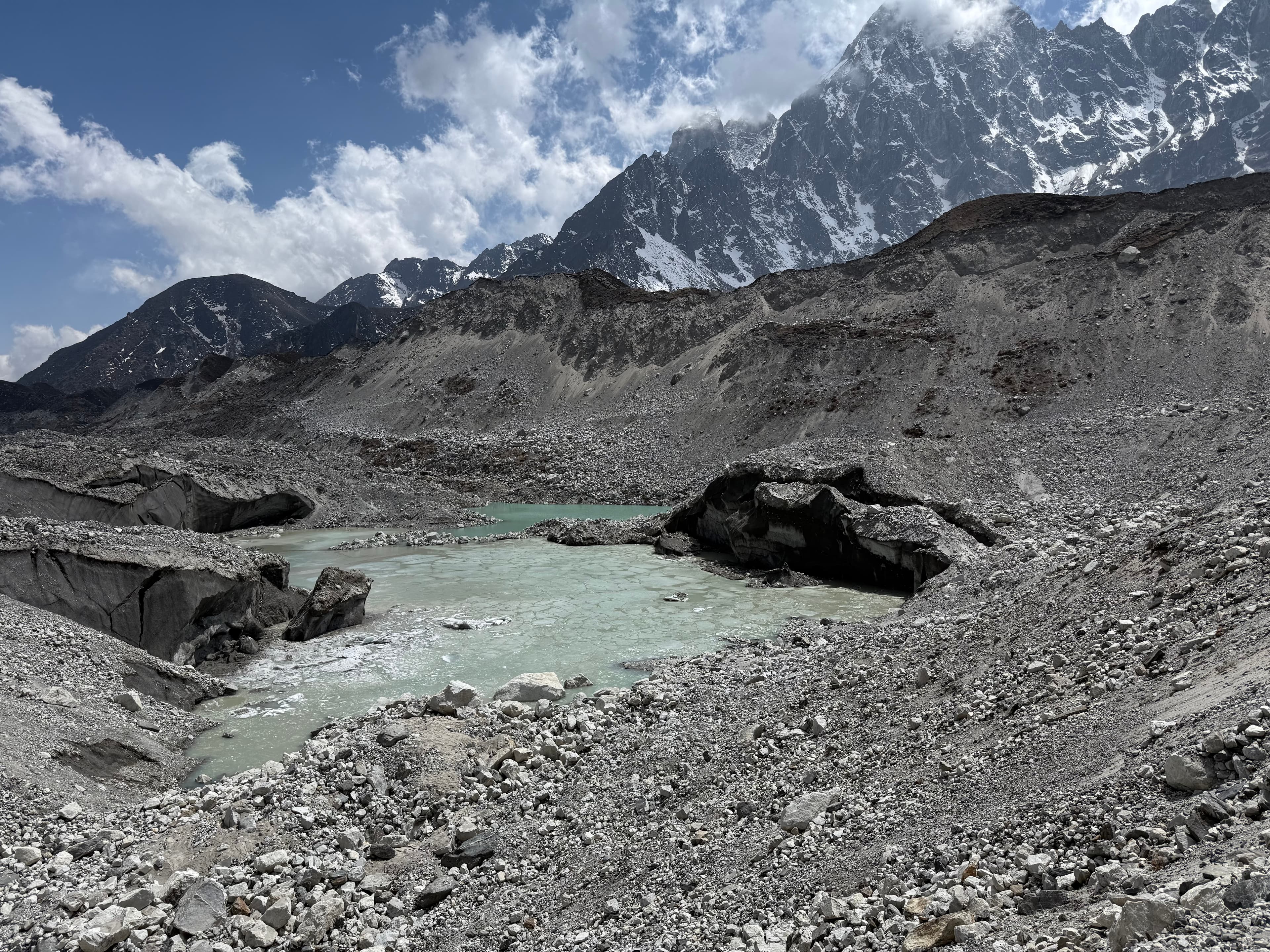
This was the first day we really felt like we were in the Himalayas. The alpine shrublands gave way to barren rock. Glacial moraines scored the landscape amidst stark, ice-capped mountains. Little life survived this high.
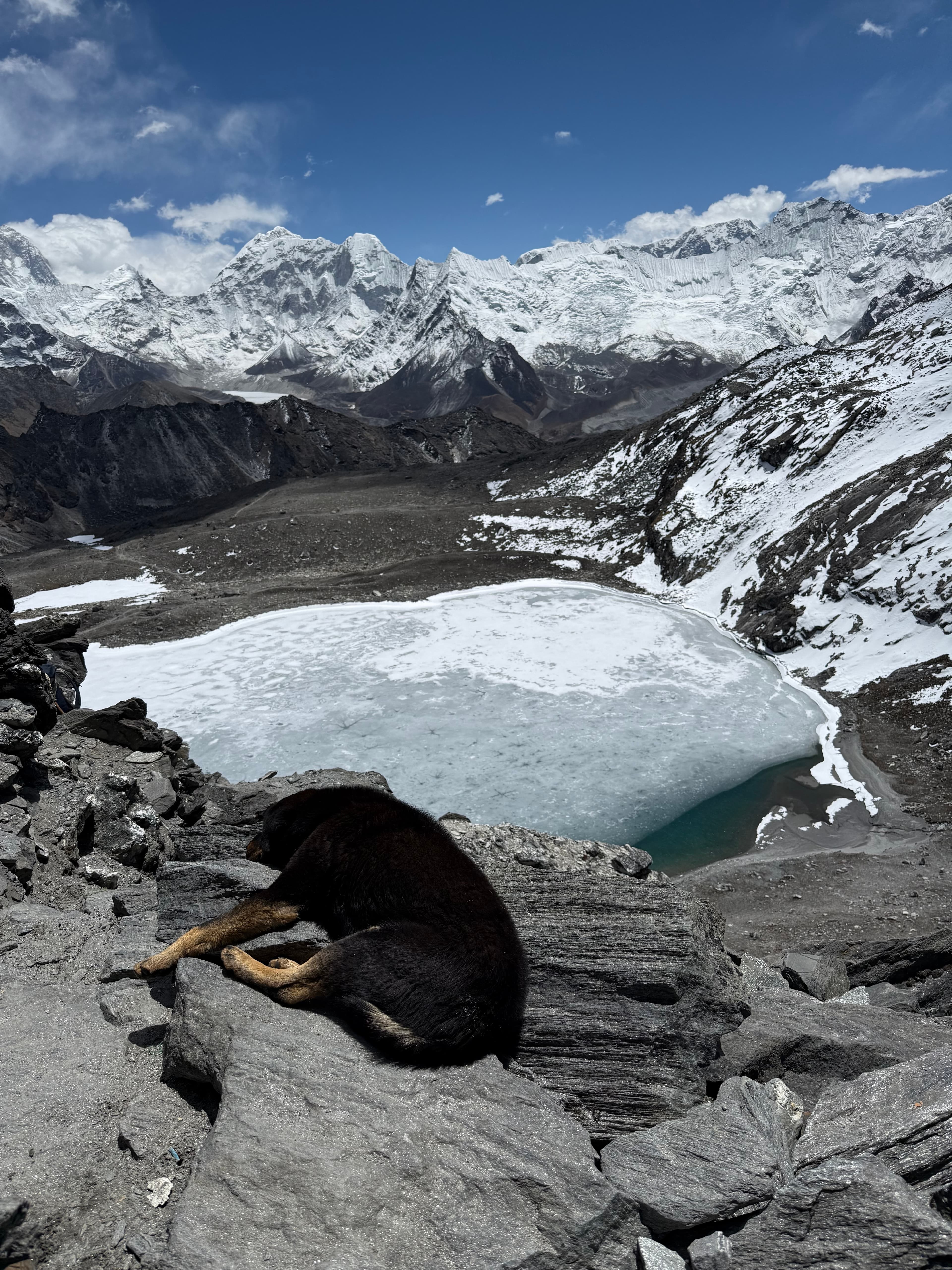
We by all measures killed our first pass. I was expecting it to be much worse, but the endless uphill eventually gave way and we were 5500m above sea level, staring down at the Khumbu glacier and boulder fields.
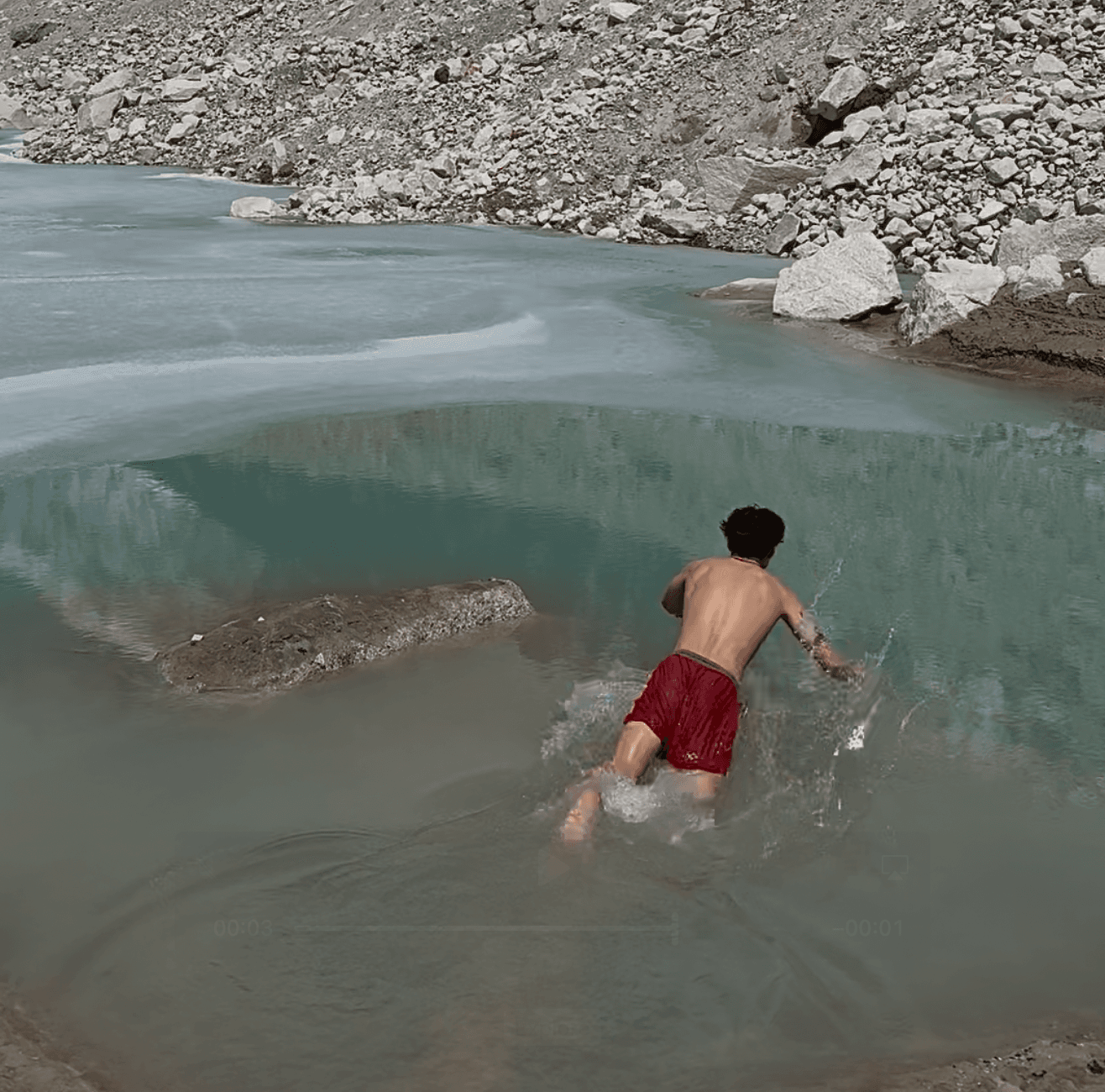
Tal and I did a polar plunge in a half-frozen lake. I went into shock.
We trudged through scree fields and made it to Lobuche in the afternoon, where we struggled to get a room. Lobuche, as the entrypoint to Everest, was packed with people. Tal wanted to push onto the next town six kilometers away, but the pass had taken a lot out of us, and we hadn't eaten lunch yet. Blessedly the proprieters of the worst inn in the town came to us and let us stay in a very sad, sketchy room - but a room's a room!
Day 7: Lobuche to Lobuche High Camp
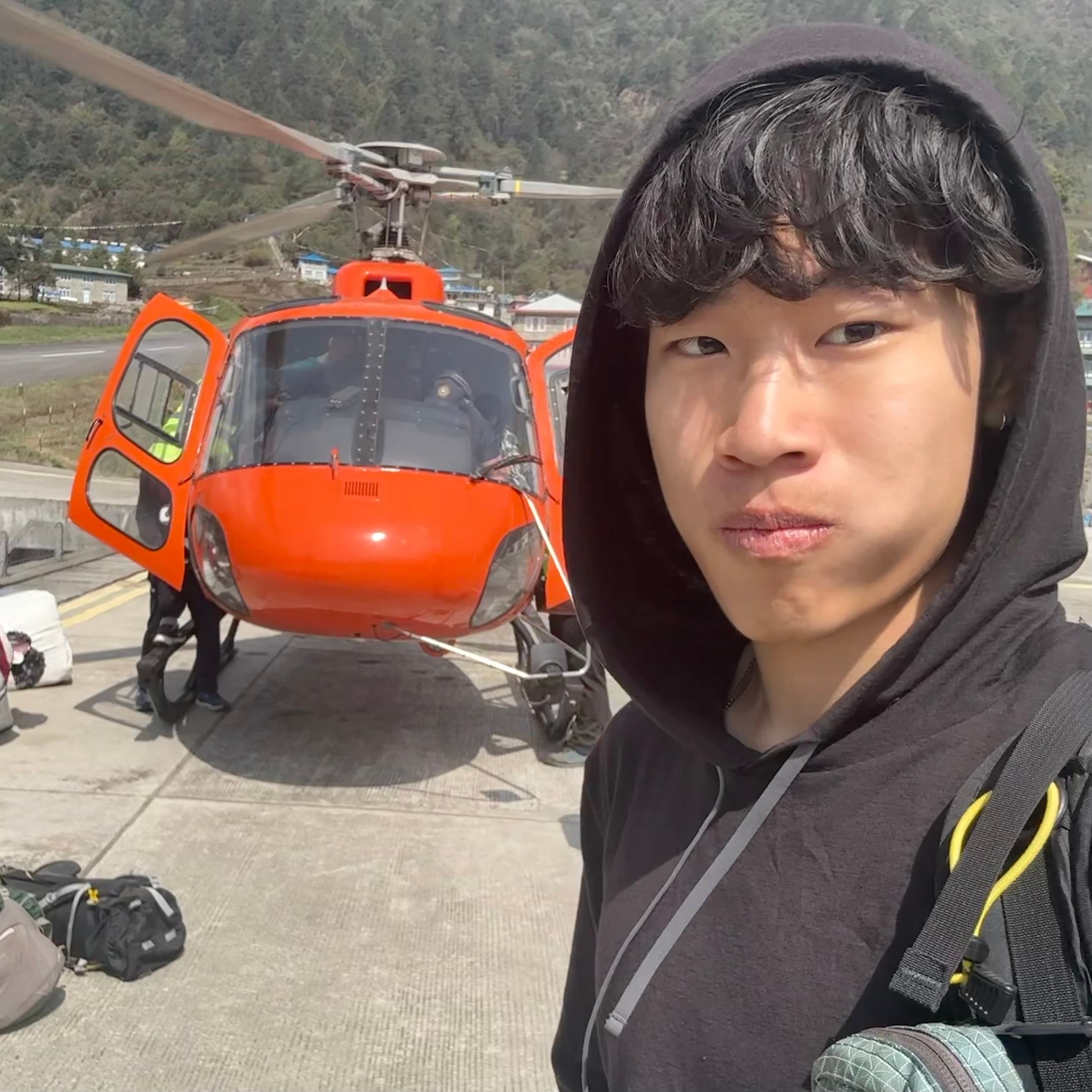
Tal got severe altitude sickness overnight. He has wanton disregard for his own life and wanted to stay and tough it out, but I enlisted the help of his mother and we forced him to take a helicopter back to the lowlands. My theory is that the cold shock stress and vasoconstriction from the polar plunge might’ve triggered it, since he was doing a lot better than me over the past few days, and we only ended 200 meters higher than we started yesterday.
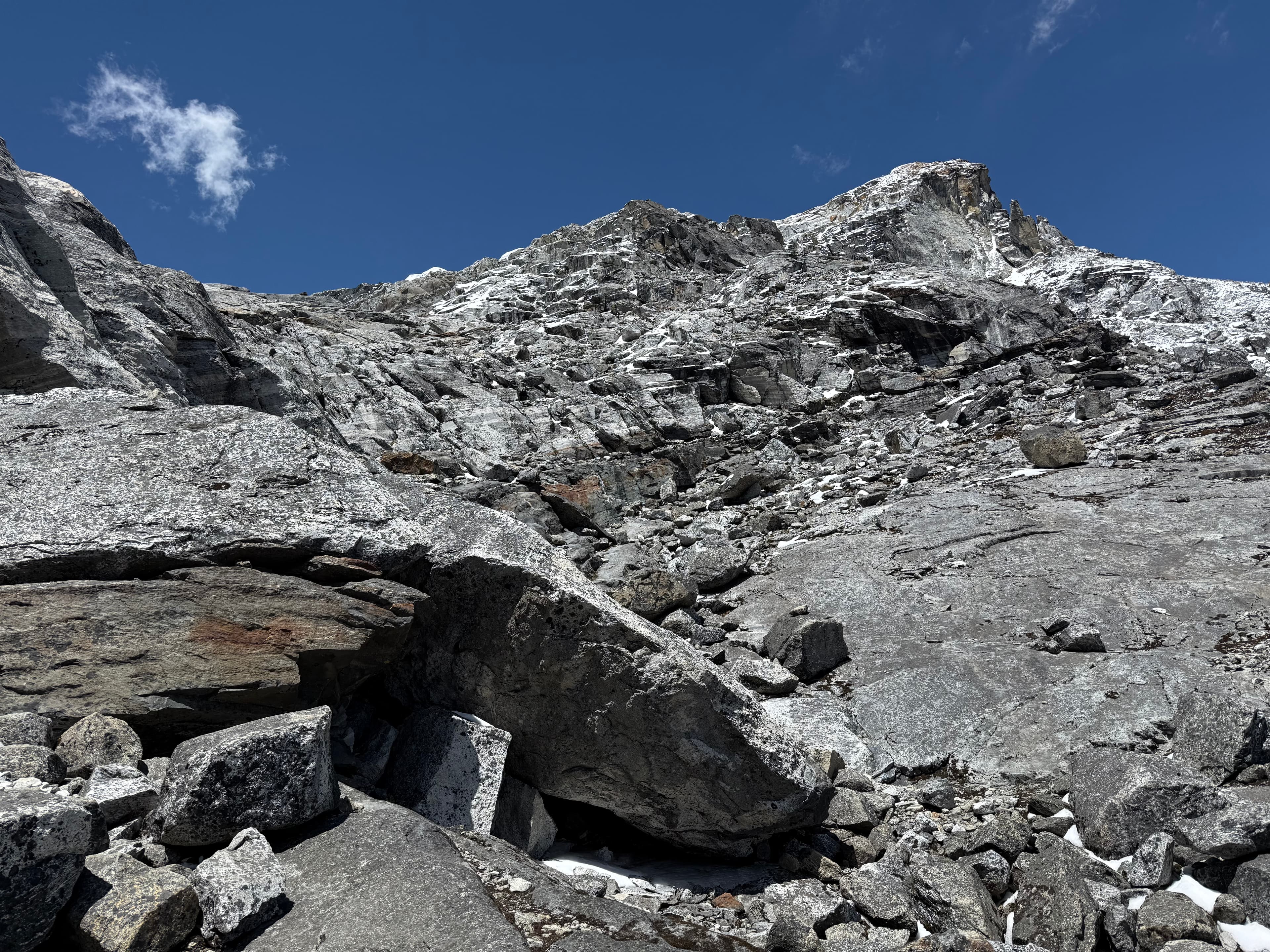
I still had to finish the trek. But I also wanted badly to go on a side quest and climb Lobuche, a 6000m peak. We met two mountaineers who were also staying at our lodge a few nights ago and they highly recommended it.
One of the teahouse owners at Lobuche set me up with a guide and I hiked a few kilometers to the mountain’s base camp to meet him.
There I met a gaggle of older chinese tourists also going to summit. Three of them were planning on climbing Everest later in the season. They were absolutely decked out in gear (insanely thick insulated parkas, pants, etc) and reminded me of astronauts. The Chinese really know how to travel - they brought a personal chef (I guess they weren’t a fan of the Nepali cuisine). It was the same in Tanzania, many Chinese refused to work at a company if they weren’t provided with a Chinese cook.
I got invited to dinner and feasted.
Day 7.5: Lobuche East
I woke up hyped to climb a 20,000 footer!
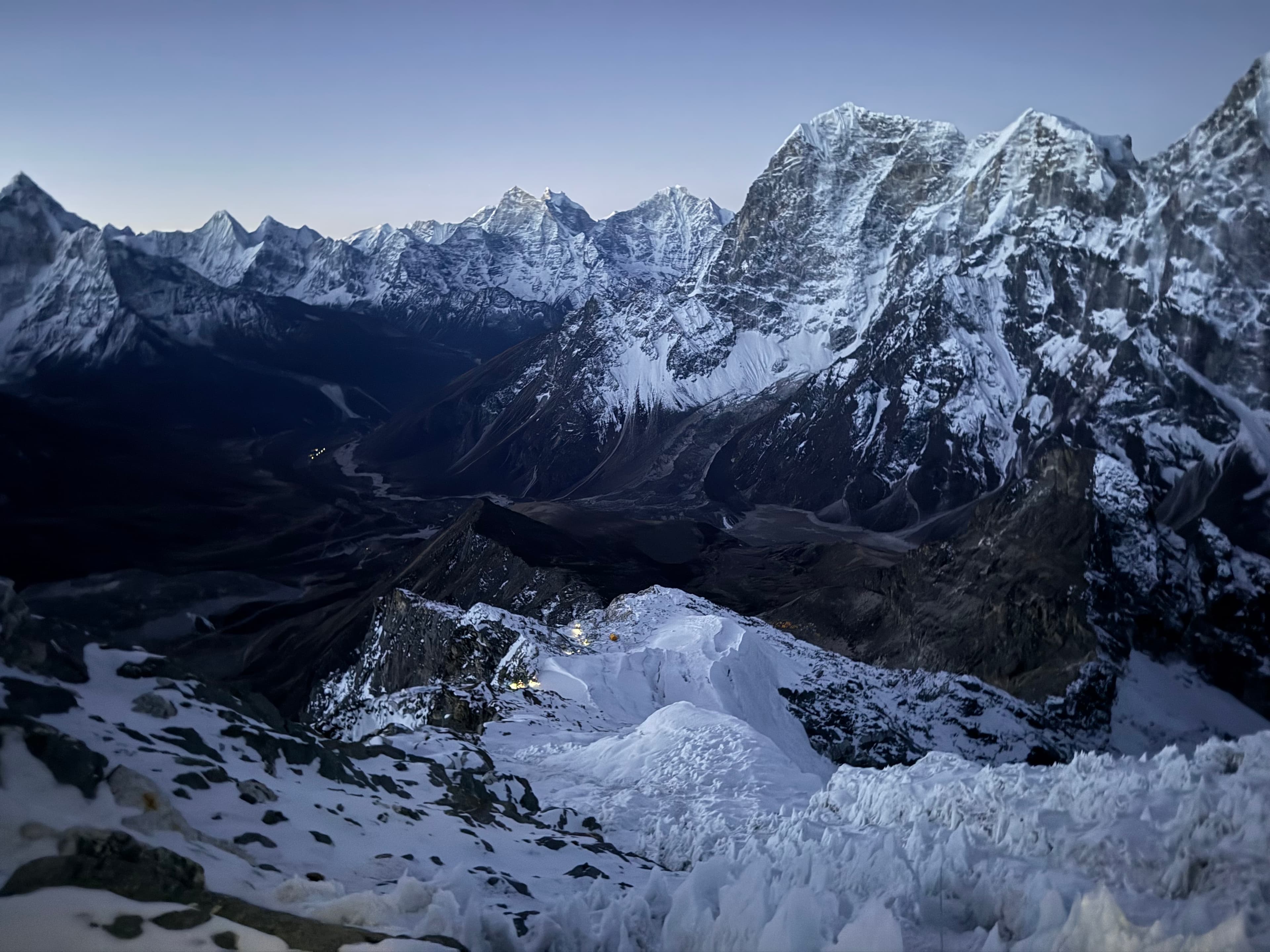
My guide wanted to start at 12am; I negotiated him to 2am, and honestly could’ve gone later than that. It was a grueling four hour ascent, during which I passed all twenty Chinese climbers who all looked in various states of duress. One of them was carrying an oxygen tank! And getting dragged up the mountain by their guide.
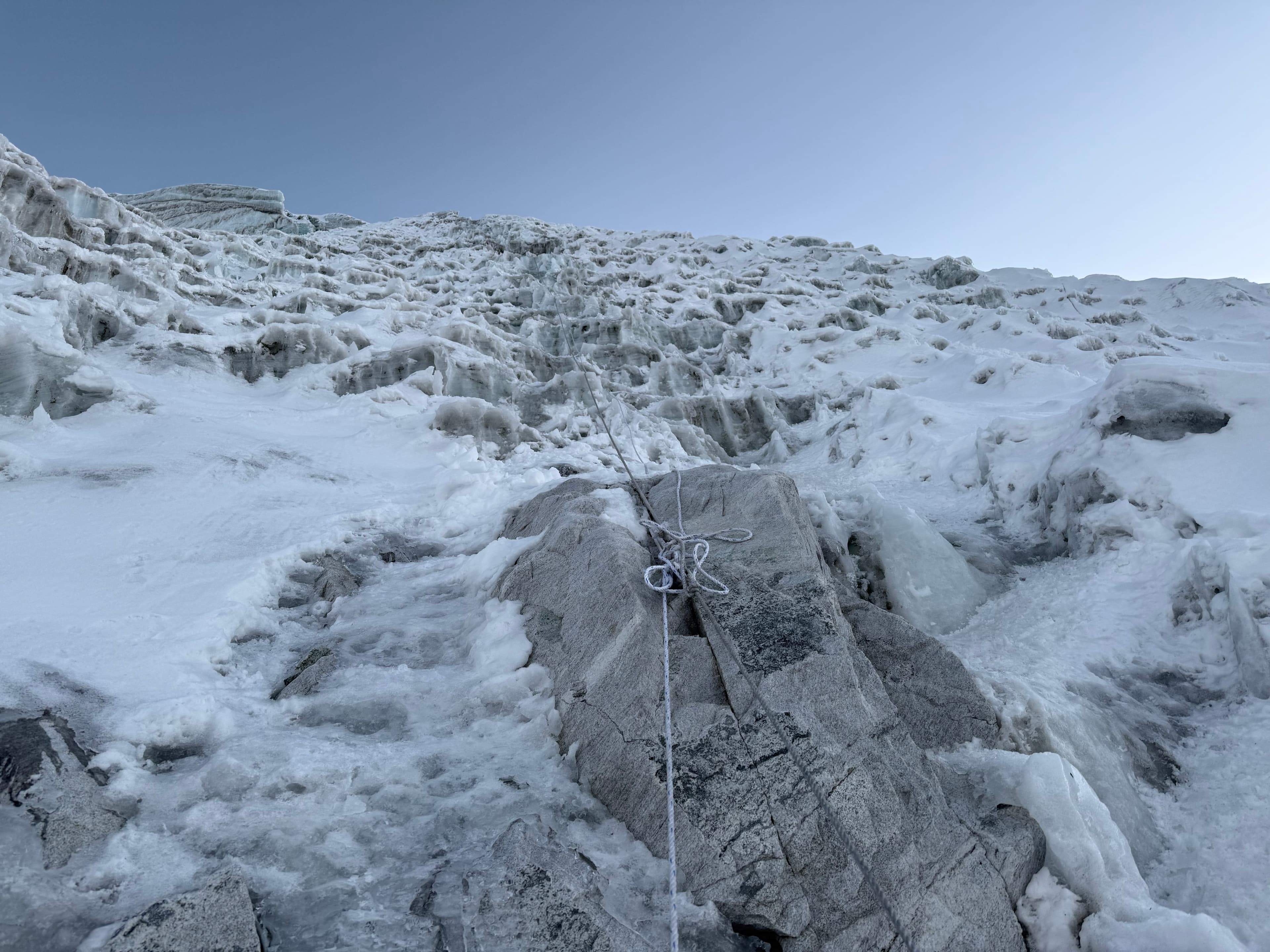
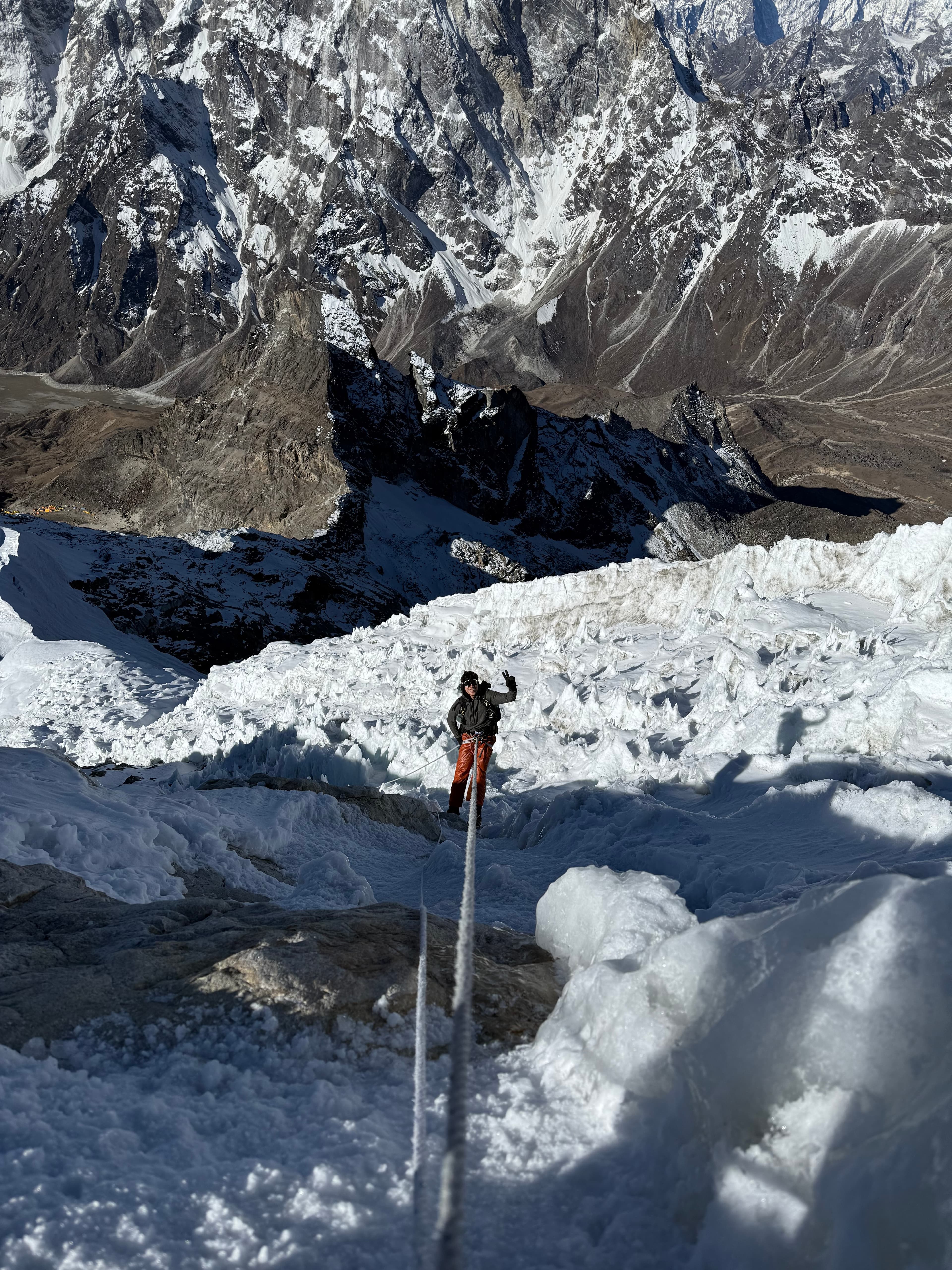
The route was straightforward and never felt too sketchy, even when it started going straight upwards. We needed crampons about halfway through the climb. For the final hour, we were hauling ourselves up sheer cliffs with fixed ropes, which at that elevation, with less than half of normal oxygen levels, was excruciating. Everything burned. Time dilated. Each step forward required its own conscious exercise of willpower.
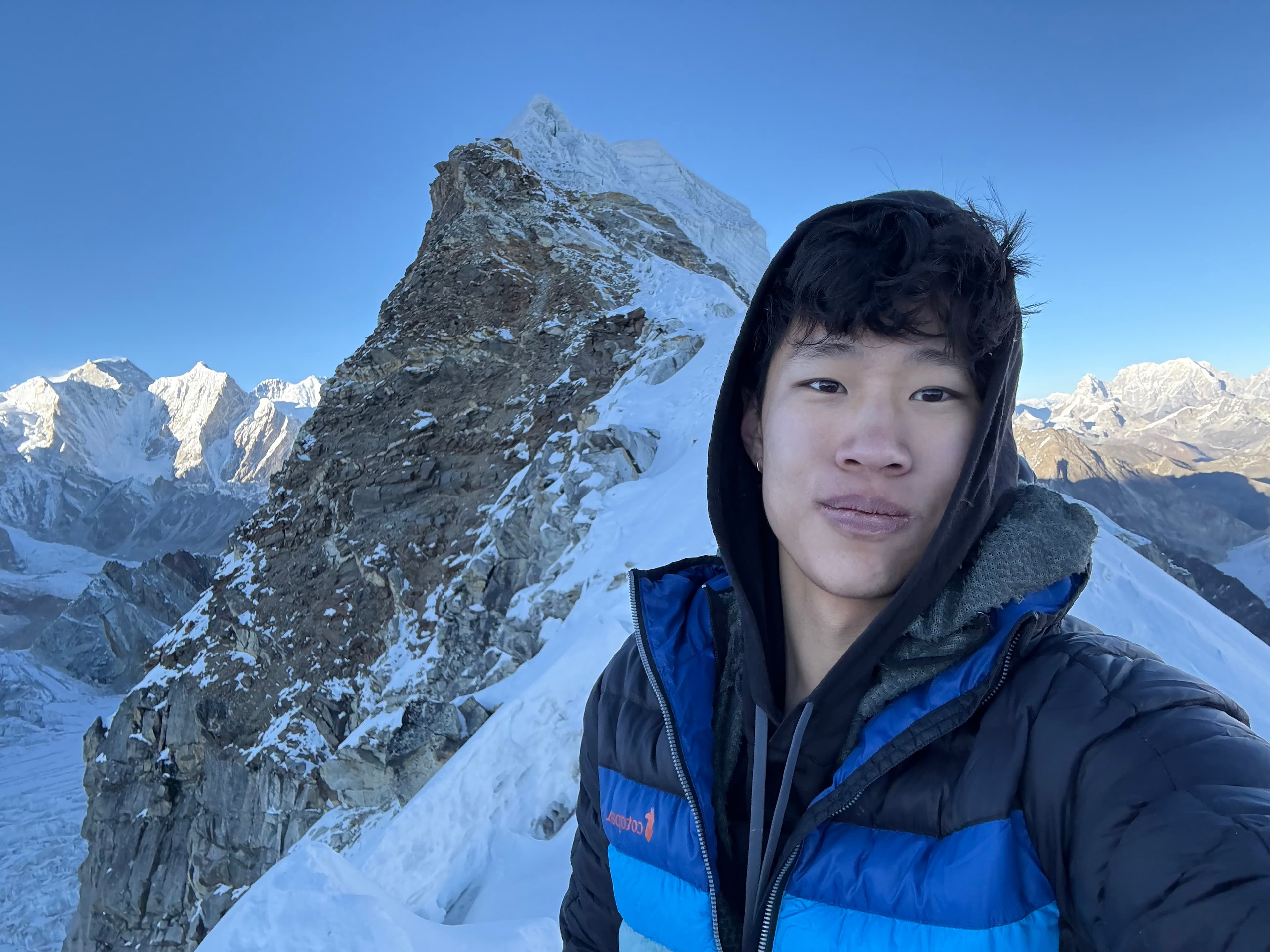
My guide Tempa and I were first to the summit! We ate some chocolates and took a ton of pictures, taking our sweet time. It’s a good thing we were first too—the summit is super small and I did not want to share. Great views all around; but for these things the pleasure is in the journey.
The way down was a lot easier and faster—gravity is a double edged sword. We rappelled down the ice walls that took hours to ascend, slid across the snowy fields, and made it back to base camp thoroughly exhausted.
I hate climbing mountains.
Day 8: Lobuche High Camp to Dzonglha
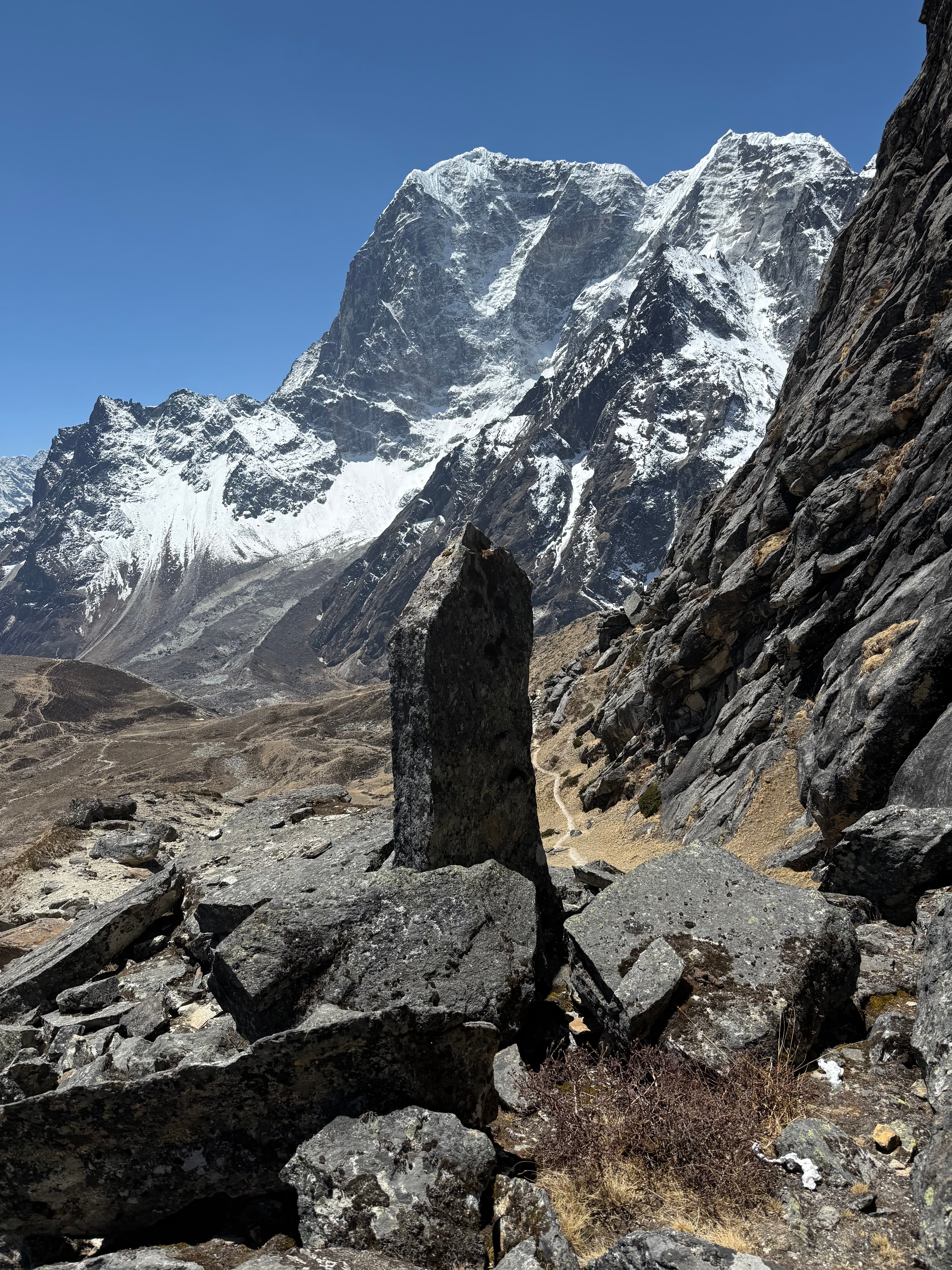
After a brief recovery in base camp, I went on with my day and hiked a few more kilometers to the next town of Dzonglha. Ideally I would’ve made it one more town beyond, but the Lobuche ascent took it out of me. I barely made it to Dzonglha.
I posted up there for the rest of the day, enjoying my first hot shower since Pangboche five days prior.
Day 9: Dzonglha to Lungdhen via Cho La Pass and Renjo La Pass
This was a backloaded itinerary. Summiting Lobuche into a double pass day is a lot. I also started way too late.
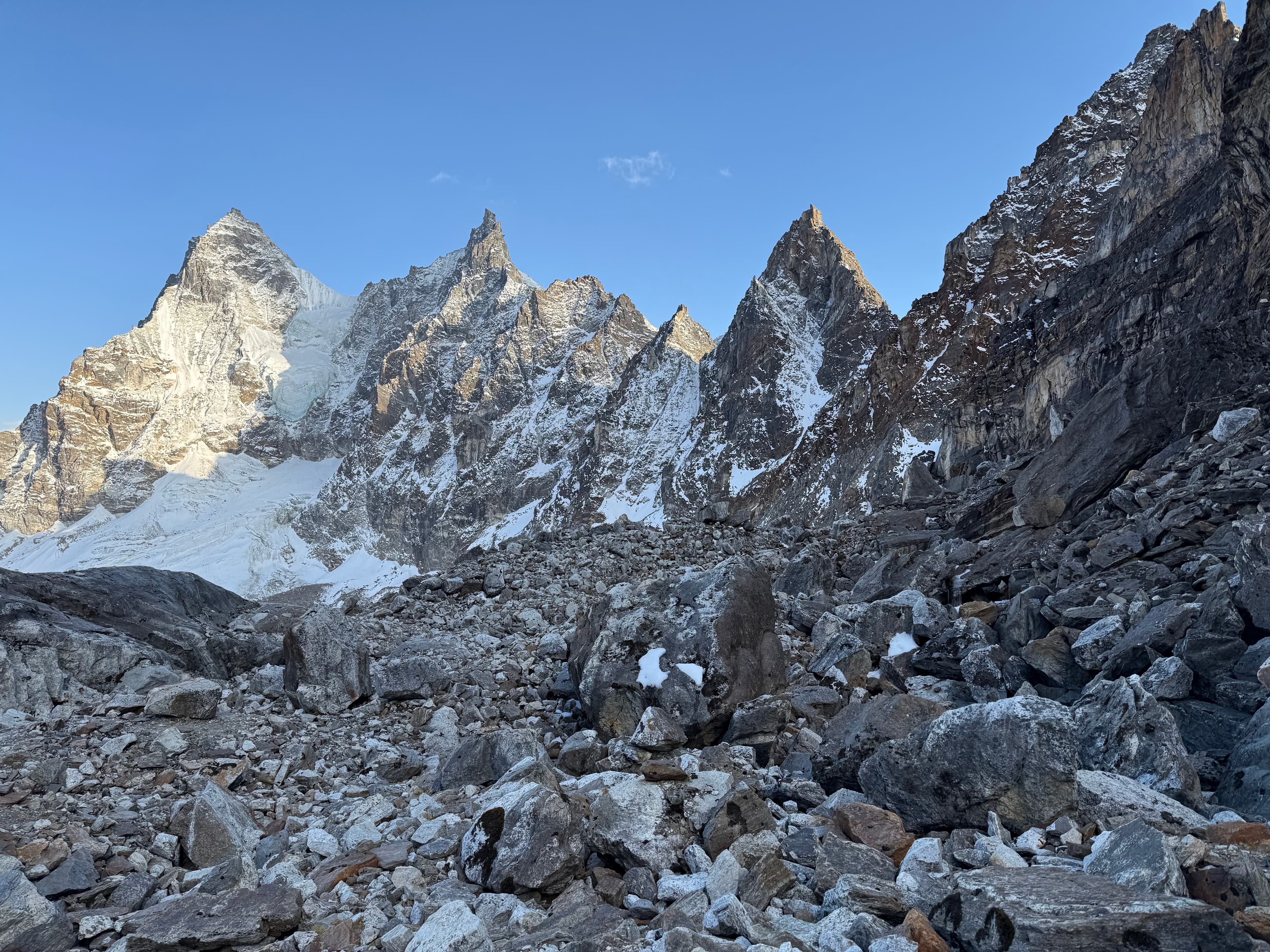
I made it to Dragnag, the next town over, in good time and spent thirty minutes chilling there before climbing Cho La Pass. It involved a glacier crossing, which was cool! A very muddied glacier.
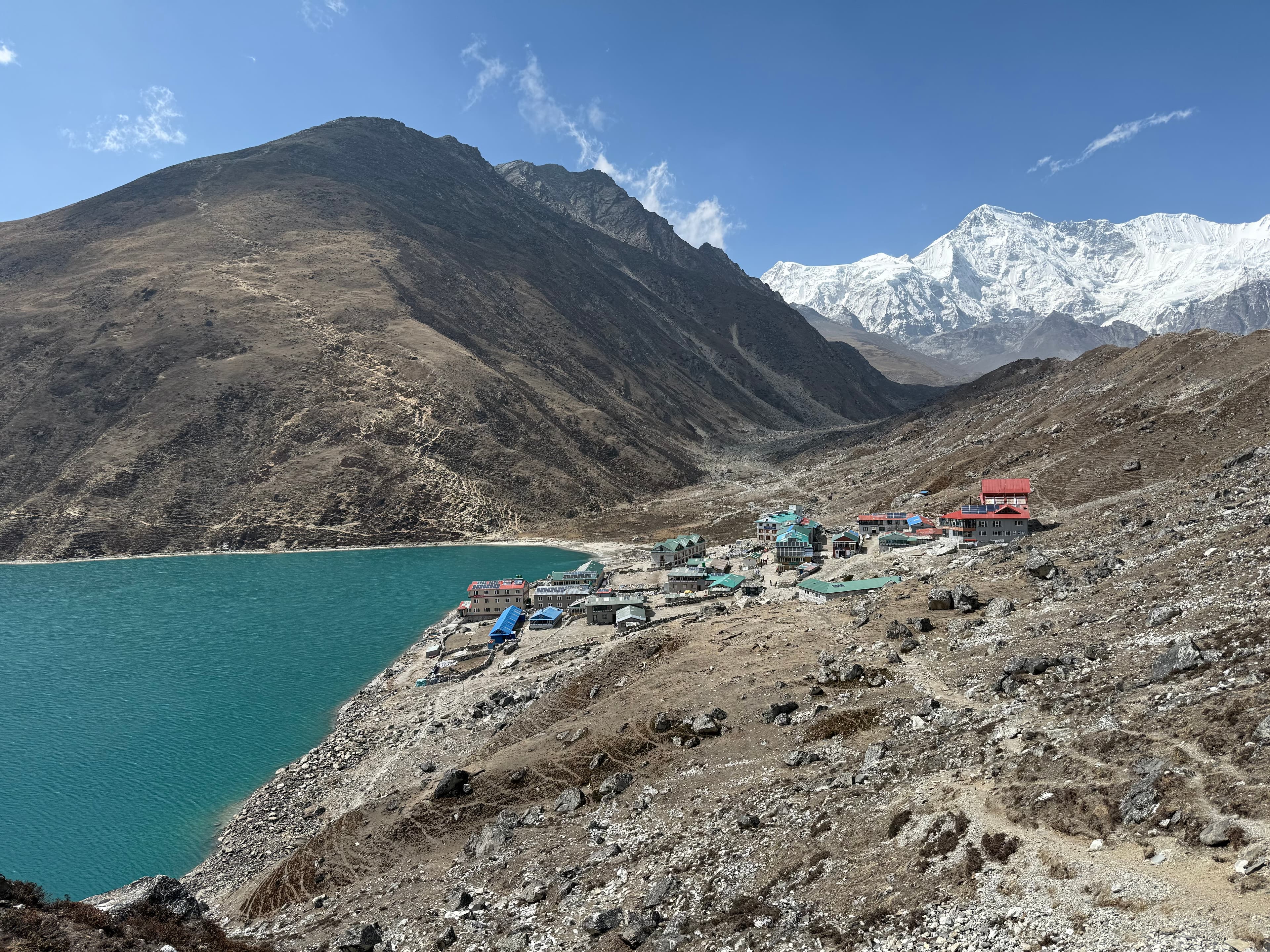
Then got to Gokyo a bit past 2pm, eating lunch at the Namaste Lodge (whose owner also helped me set up the Lobuche hike and came to chat for a while).
Then left an hour later. By this point there was nobody on the trail and it was true desolation.
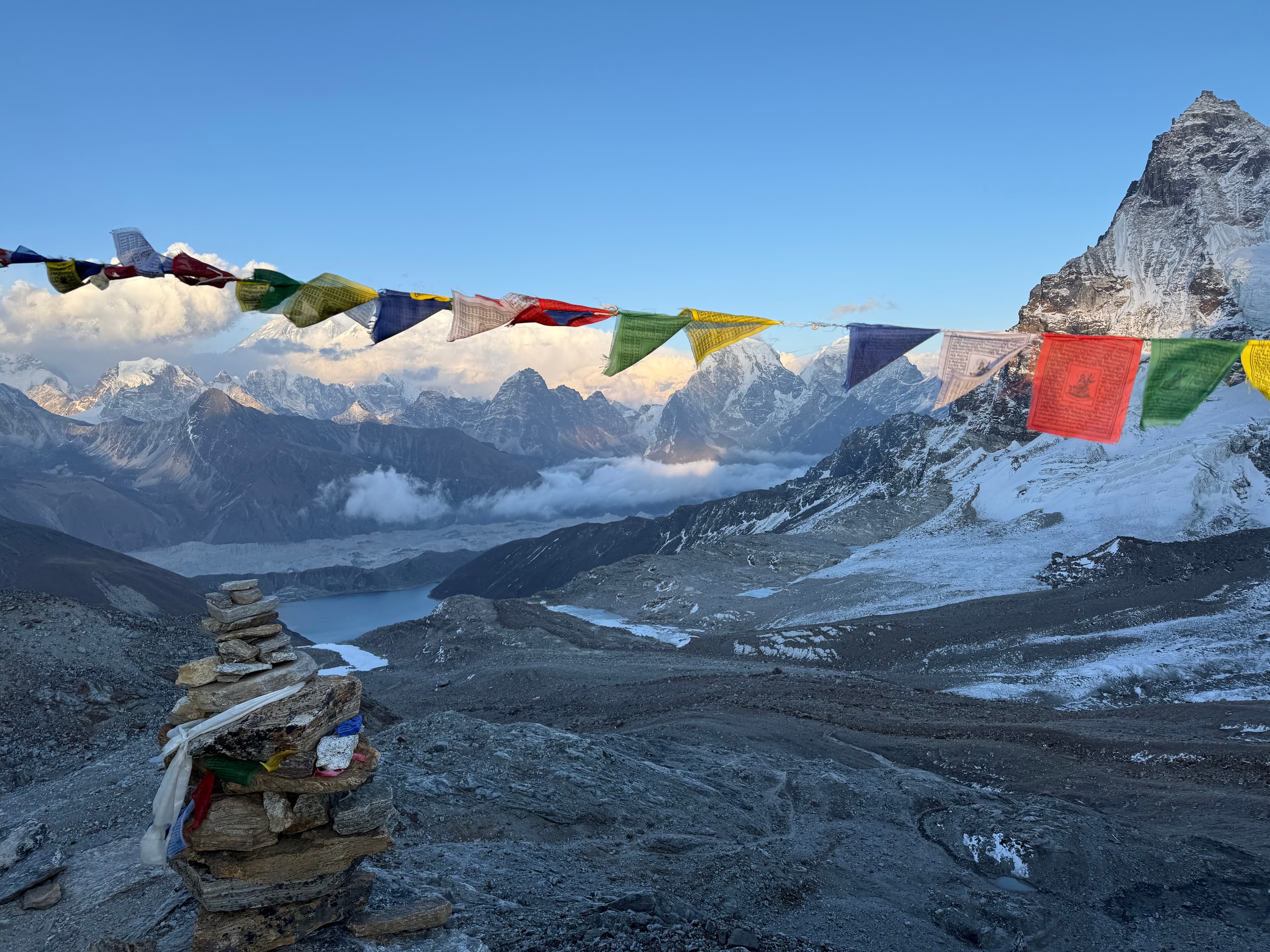
I summited Renjo La Pass at sunset and had it all to myself.
The way down from Renjo La was paved in stairs which was a pleasant surprise.
I hiked in darkness for the last hour; I lost enough elevation for the shrubs to come back and the trail was graded well and easy to follow, making it to town at 8:30pm.
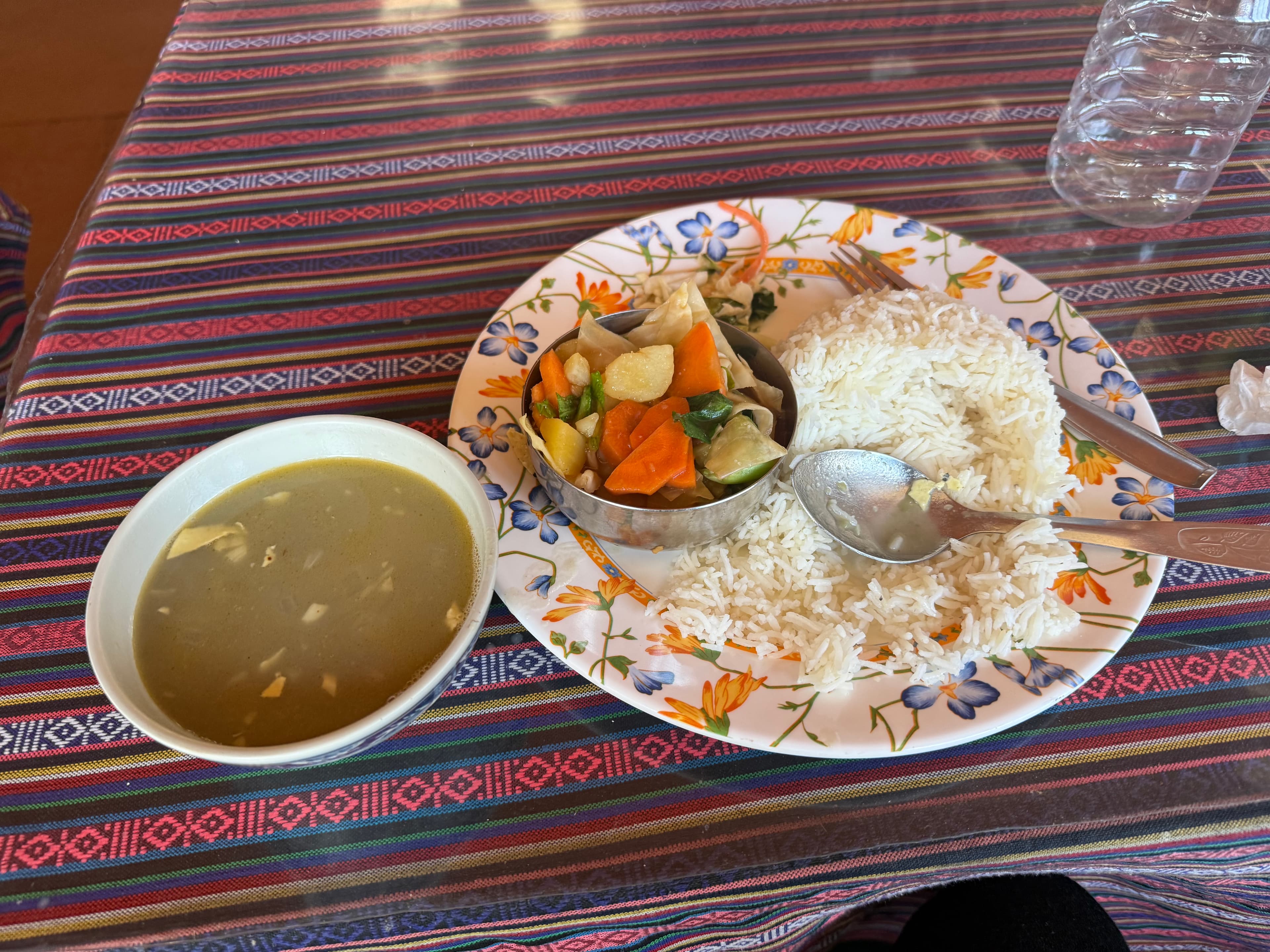
By then dinner had already been served; I went to bed hungry and gross, but I was too tired to really care.
Day 10: Lungdhen to Namche Bazar
After days of going up, going down and into oxygen felt so good! I had a bright and early start to the day, as I'd originally planned hiking to Lukla. But decided to get a helicopter out of Namche Bazar instead—I'd already hiked the Namche to Lukla portion, and at this point craved civilization and good food and fresh clothes.
I ended up back in Kathmandu at 3pm, and met up with a (mostly) recovered Tal.
The journey continues!
Gear List
I was pretty happy with my gear. I wore my wool sun hoody basically every day and washed it once and it didn’t really smell (I wasn’t ever that sweaty). I didn’t pack a sleeping bag or pillow and it wasn’t a problem (all the lodges provide ample bedding). The one thing I felt like I was missing was shower slippers.
Clothing
- Ridge Merino Sun Hoodie
- Senchi Designs A90 Quarter Zip
- Cotopaxi Fuego Down Hooded Jacket
- Smartwool T Shirt
- Lululemon Shorts
- Montbell Cool Pants
- Smartwool Base Layer Top
- Smartwool Base Layer Leggings
- Enlightened Equipment Cooperfield Wind Pants
- Gaiters
- Topo Ultraventure 4
- 4 x Darn Tough Socks
- 3x Boxers
- Light Gloves
- Montbell Versalite Rain Jacket
Backpack
- ULA Circuit (this was overkill but I had it)
Toiletries
- Toothbrush/toothpaste/floss
- Contacts
- Medicine (notably Diamox)
- Lip balm
- Blister tape
- Anti chafing
- Sunscreen
Misc
- Black Diamond Alpine Carbon Cork Poles
- Toilet paper roll
- Tissues
- Power bank (10,000mah)
- Headlamp
- Sleeping bag liner
- Small REI towel
- Sunglasses
- Norwegian Wood
- Airpods
- $500 (I'd budget at least $50/day/person for a comfortable trip. Prices correlate with elevation!)